Psychological manipulation as political and economic exploitation
ASX-75-010-Q03 · Part VII · Cosmogeopolism · Chapter 5: The Galactic Stage
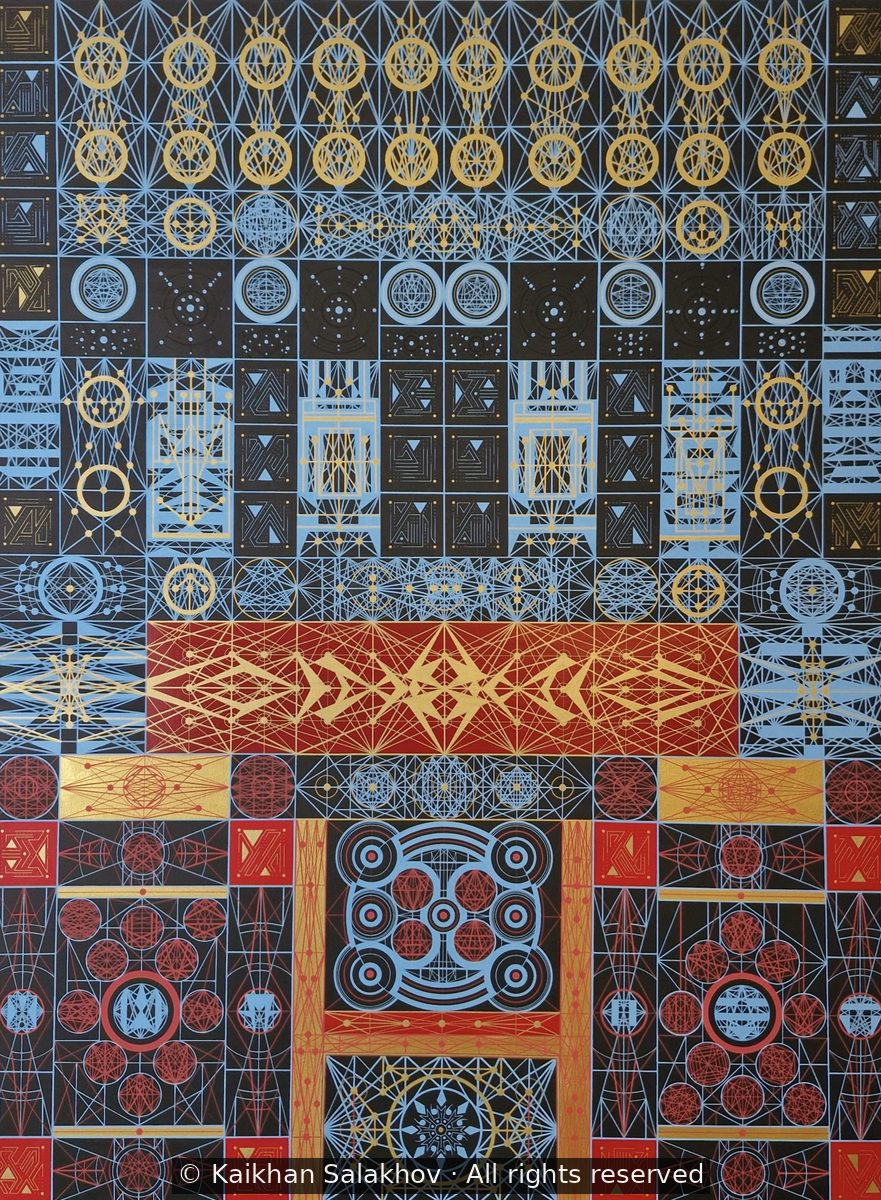
Cosmogeopolitics Across Life Forms
Political coordination, unequal resources and local autonomy under spatial separation and communication constraints.
Read the full painting meaning →The scenario considers institutions that deliberately intensify fear and hostility because division serves their political or commercial interests. Targeted information, fabricated threats, and dependence on security products could reinforce incentives to maintain antagonism between populations.
The passage adds a speculative mechanism in which emotional responses are harvested as an energy resource. That assumption changes the imagined incentive structure: manipulation would support material extraction as well as political control. A faithful summary must retain this premise as part of the scenario while distinguishing it from an established technology. The central question concerns how populations could resist an exploitation system whose beneficiaries have continuing incentives to reproduce distress and conflict.
Main problem
Political and commercial actors could benefit from maintaining psychological distress, making exploitation self-reinforcing within the scenario.
Central question
What forms of resistance and institutional change could counter psychological manipulation used for political, economic, and, within the speculative scenario, energy extraction?
Analytical connections
Governance
Examines institutions that organize or permit coercive manipulation.
Resource Allocation / Economy
Examines incentives and the proposed conversion of distress into a resource.
Communication
Examines propaganda, fabricated threats, and targeted information.
Consciousness / Psychology
Examines the manipulation of emotional and perceptual states.
Ethics / Moral Consideration
Examines coercion, harm, and the protection of affected populations.
Original source prose and question wording remain in the book. The summary and central question are analytical restatements; the author’s complete wording remains in the cited source.
ASX positions and scientific context
- P4 scope
- P5 scope
- C2 thematic relevance
- C position: not established
- Speculative scenario
Physical scope and coordination themes describe fields of inquiry. They do not establish a measured capability or scientific validation.
Cross-domain dependencies
Conditional analytical comparisons; question-level access follows the parent discussion.
Exclusion, segregation and conflict
Exclusionary classifications or doctrines can legitimate segregation and coercion. Conflict and coercive governance can in turn intensify mistrust and separation. These are conditional feedback mechanisms, not inevitable consequences of cultural difference.
ASX-15-017: The Formation of Spiritual Wars and Splits through Technological Disparities, pp. 47–47; ASX-75-010: Xenophobia as a Weapon. Strategic Control, Manipulation and Monetisation in Galactic Cosmogeopolitical Games, pp. 750–752.
Open ASX-15-017Xenophobia and political manipulation
Political actors can exploit fear of unfamiliar life forms to redirect support or normalize exclusion.
Existing exclusionary beliefs can make those manipulative strategies more effective.
ASX-15-019: Galactic Spiritual Xenophobia, pp. 47–48; ASX-75-010: Xenophobia as a Weapon. Strategic Control, Manipulation and Monetisation in Galactic Cosmogeopolitical Games, pp. 750–752.
Open ASX-15-019Exclusion, segregation and conflict
Exclusionary classifications or doctrines can legitimate segregation and coercion. Conflict and coercive governance can in turn intensify mistrust and separation. These are conditional feedback mechanisms, not inevitable consequences of cultural difference.
ASX-15-021: Galactic Spiritual Warfare and Cleansing. The Dark Side of Spiritual Conflict, pp. 48–48; ASX-75-010: Xenophobia as a Weapon. Strategic Control, Manipulation and Monetisation in Galactic Cosmogeopolitical Games, pp. 750–752.
Open ASX-15-021Exclusion, segregation and conflict / Resource access and concentration of power / Infrastructure and strategic conflict
Exclusionary classifications or doctrines can legitimate segregation and coercion. Conflict and coercive governance can in turn intensify mistrust and separation. These are conditional feedback mechanisms, not inevitable consequences of cultural difference.
Unequal access to energy, technology, transport or information can create dependence and unequal bargaining power. Institutions and dominant operators may reinforce or reduce the same inequalities through allocation and access rules.
Infrastructure can become both a strategic asset and a target. Conflict may disrupt energy, transport or communications, while dependence on those services can be exploited to constrain decisions.
ASX-15-007: Spiritual Division by Quantum Hauling Monopolies. Spiritual Division Caused by Quantum Transportation Monopolies, pp. 44–45; ASX-75-010: Xenophobia as a Weapon. Strategic Control, Manipulation and Monetisation in Galactic Cosmogeopolitical Games, pp. 750–752.
Open ASX-15-007Deception and information integrity / Ecological intervention and habitation / Exclusion, segregation and conflict / Resource access and concentration of power / Technical and cognitive interoperability / Simulation, dependency and coercion / Infrastructure and strategic conflict
Manipulated information can alter trust, resource decisions, collective memory and political legitimacy. The links compare this mechanism across domains; quantum or photonic deception retains the scientific limitations of the cited scenario.
Habitats and life-support systems depend on environmental conditions; engineering and resource extraction can change those conditions. Institutional priorities determine acceptable interventions, whose consequences can then alter settlement viability and social choices.
Exclusionary classifications or doctrines can legitimate segregation and coercion. Conflict and coercive governance can in turn intensify mistrust and separation. These are conditional feedback mechanisms, not inevitable consequences of cultural difference.
Unequal access to energy, technology, transport or information can create dependence and unequal bargaining power. Institutions and dominant operators may reinforce or reduce the same inequalities through allocation and access rules.
Interoperation depends on compatible interfaces and sufficiently shared interpretations. Standards, translation and access arrangements affect cooperation, while biological and cognitive differences can change what a usable interface requires.
Control of a simulated environment can create dependence through access, representation, property or exit restrictions. Economic and political power outside the simulation can influence the rules enforced within it.
Infrastructure can become both a strategic asset and a target. Conflict may disrupt energy, transport or communications, while dependence on those services can be exploited to constrain decisions.
ASX-55-003: AQAL Framework for Galactic Infrastructure and Communication Networks, pp. 482–484; ASX-75-010: Xenophobia as a Weapon. Strategic Control, Manipulation and Monetisation in Galactic Cosmogeopolitical Games, pp. 750–752.
Open ASX-55-003Autonomy and control of artificial systems / Communication failure and continuity / Deception and information integrity / Resource access and concentration of power / Technical and cognitive interoperability / Simulation, dependency and coercion / Infrastructure and strategic conflict
Delegated machine authority can affect infrastructure, environmental interventions and coercive capability. Accountability, access controls and institutional incentives can also alter how autonomous systems are deployed.
Loss or corruption of a shared communication service can interrupt coordination, maintenance and transmission of cultural or spiritual knowledge. The dependency applies when the systems actually share that service; similar titles alone do not establish a historical causal event.
Manipulated information can alter trust, resource decisions, collective memory and political legitimacy. The links compare this mechanism across domains; quantum or photonic deception retains the scientific limitations of the cited scenario.
Unequal access to energy, technology, transport or information can create dependence and unequal bargaining power. Institutions and dominant operators may reinforce or reduce the same inequalities through allocation and access rules.
Interoperation depends on compatible interfaces and sufficiently shared interpretations. Standards, translation and access arrangements affect cooperation, while biological and cognitive differences can change what a usable interface requires.
Control of a simulated environment can create dependence through access, representation, property or exit restrictions. Economic and political power outside the simulation can influence the rules enforced within it.
Infrastructure can become both a strategic asset and a target. Conflict may disrupt energy, transport or communications, while dependence on those services can be exploited to constrain decisions.
ASX-55-002: Galactic Free Speech. Meeting the Challenges of Information Control in an Interstellar Society, pp. 480–482; ASX-75-010: Xenophobia as a Weapon. Strategic Control, Manipulation and Monetisation in Galactic Cosmogeopolitical Games, pp. 750–752.
Open ASX-55-002Autonomy and control of artificial systems / Communication failure and continuity / Ecological intervention and habitation / Resource access and concentration of power / Technical and cognitive interoperability / Simulation, dependency and coercion / Infrastructure and strategic conflict
Delegated machine authority can affect infrastructure, environmental interventions and coercive capability. Accountability, access controls and institutional incentives can also alter how autonomous systems are deployed.
Loss or corruption of a shared communication service can interrupt coordination, maintenance and transmission of cultural or spiritual knowledge. The dependency applies when the systems actually share that service; similar titles alone do not establish a historical causal event.
Habitats and life-support systems depend on environmental conditions; engineering and resource extraction can change those conditions. Institutional priorities determine acceptable interventions, whose consequences can then alter settlement viability and social choices.
Unequal access to energy, technology, transport or information can create dependence and unequal bargaining power. Institutions and dominant operators may reinforce or reduce the same inequalities through allocation and access rules.
Interoperation depends on compatible interfaces and sufficiently shared interpretations. Standards, translation and access arrangements affect cooperation, while biological and cognitive differences can change what a usable interface requires.
Control of a simulated environment can create dependence through access, representation, property or exit restrictions. Economic and political power outside the simulation can influence the rules enforced within it.
Infrastructure can become both a strategic asset and a target. Conflict may disrupt energy, transport or communications, while dependence on those services can be exploited to constrain decisions.
ASX-35-003: Simulations as a Means of Control and Subjugation, pp. 265–267; ASX-75-010: Xenophobia as a Weapon. Strategic Control, Manipulation and Monetisation in Galactic Cosmogeopolitical Games, pp. 750–752.
Open ASX-35-003Autonomy and control of artificial systems / Communication failure and continuity / Ecological intervention and habitation / Resource access and concentration of power / Technical and cognitive interoperability / Simulation, dependency and coercion
Delegated machine authority can affect infrastructure, environmental interventions and coercive capability. Accountability, access controls and institutional incentives can also alter how autonomous systems are deployed.
Loss or corruption of a shared communication service can interrupt coordination, maintenance and transmission of cultural or spiritual knowledge. The dependency applies when the systems actually share that service; similar titles alone do not establish a historical causal event.
Habitats and life-support systems depend on environmental conditions; engineering and resource extraction can change those conditions. Institutional priorities determine acceptable interventions, whose consequences can then alter settlement viability and social choices.
Unequal access to energy, technology, transport or information can create dependence and unequal bargaining power. Institutions and dominant operators may reinforce or reduce the same inequalities through allocation and access rules.
Interoperation depends on compatible interfaces and sufficiently shared interpretations. Standards, translation and access arrangements affect cooperation, while biological and cognitive differences can change what a usable interface requires.
Control of a simulated environment can create dependence through access, representation, property or exit restrictions. Economic and political power outside the simulation can influence the rules enforced within it.
ASX-65-007: The Role of the Xenoanthropologists in Missions to Deep Space, Galactic Colonization, and Terraforming, pp. 631–632; ASX-75-010: Xenophobia as a Weapon. Strategic Control, Manipulation and Monetisation in Galactic Cosmogeopolitical Games, pp. 750–752.
Open ASX-65-007Autonomy and control of artificial systems / Communication failure and continuity / Deception and information integrity / Ecological intervention and habitation / Resource access and concentration of power / Technical and cognitive interoperability / Infrastructure and strategic conflict
Delegated machine authority can affect infrastructure, environmental interventions and coercive capability. Accountability, access controls and institutional incentives can also alter how autonomous systems are deployed.
Loss or corruption of a shared communication service can interrupt coordination, maintenance and transmission of cultural or spiritual knowledge. The dependency applies when the systems actually share that service; similar titles alone do not establish a historical causal event.
Manipulated information can alter trust, resource decisions, collective memory and political legitimacy. The links compare this mechanism across domains; quantum or photonic deception retains the scientific limitations of the cited scenario.
Habitats and life-support systems depend on environmental conditions; engineering and resource extraction can change those conditions. Institutional priorities determine acceptable interventions, whose consequences can then alter settlement viability and social choices.
Unequal access to energy, technology, transport or information can create dependence and unequal bargaining power. Institutions and dominant operators may reinforce or reduce the same inequalities through allocation and access rules.
Interoperation depends on compatible interfaces and sufficiently shared interpretations. Standards, translation and access arrangements affect cooperation, while biological and cognitive differences can change what a usable interface requires.
Infrastructure can become both a strategic asset and a target. Conflict may disrupt energy, transport or communications, while dependence on those services can be exploited to constrain decisions.
ASX-45-001: Transplanet Infrastructure. Development of Cosmic Megastructures, the Technological Approach, pp. 345–347; ASX-75-010: Xenophobia as a Weapon. Strategic Control, Manipulation and Monetisation in Galactic Cosmogeopolitical Games, pp. 750–752.
Open ASX-45-001Communication failure and continuity / Deception and information integrity / Resource access and concentration of power / Technical and cognitive interoperability / Simulation, dependency and coercion
Loss or corruption of a shared communication service can interrupt coordination, maintenance and transmission of cultural or spiritual knowledge. The dependency applies when the systems actually share that service; similar titles alone do not establish a historical causal event.
Manipulated information can alter trust, resource decisions, collective memory and political legitimacy. The links compare this mechanism across domains; quantum or photonic deception retains the scientific limitations of the cited scenario.
Unequal access to energy, technology, transport or information can create dependence and unequal bargaining power. Institutions and dominant operators may reinforce or reduce the same inequalities through allocation and access rules.
Interoperation depends on compatible interfaces and sufficiently shared interpretations. Standards, translation and access arrangements affect cooperation, while biological and cognitive differences can change what a usable interface requires.
Control of a simulated environment can create dependence through access, representation, property or exit restrictions. Economic and political power outside the simulation can influence the rules enforced within it.
ASX-65-001: Xenocultural Diversity on the Galactic Stage. Consciousness, Perception, and Regulatory Frameworks Around the Galaxy, pp. 617–619; ASX-75-010: Xenophobia as a Weapon. Strategic Control, Manipulation and Monetisation in Galactic Cosmogeopolitical Games, pp. 750–752.
Open ASX-65-001Autonomy and control of artificial systems / Communication failure and continuity / Deception and information integrity / Ecological intervention and habitation / Technical and cognitive interoperability / Infrastructure and strategic conflict
Delegated machine authority can affect infrastructure, environmental interventions and coercive capability. Accountability, access controls and institutional incentives can also alter how autonomous systems are deployed.
Loss or corruption of a shared communication service can interrupt coordination, maintenance and transmission of cultural or spiritual knowledge. The dependency applies when the systems actually share that service; similar titles alone do not establish a historical causal event.
Manipulated information can alter trust, resource decisions, collective memory and political legitimacy. The links compare this mechanism across domains; quantum or photonic deception retains the scientific limitations of the cited scenario.
Habitats and life-support systems depend on environmental conditions; engineering and resource extraction can change those conditions. Institutional priorities determine acceptable interventions, whose consequences can then alter settlement viability and social choices.
Interoperation depends on compatible interfaces and sufficiently shared interpretations. Standards, translation and access arrangements affect cooperation, while biological and cognitive differences can change what a usable interface requires.
Infrastructure can become both a strategic asset and a target. Conflict may disrupt energy, transport or communications, while dependence on those services can be exploited to constrain decisions.
ASX-45-009: Cyber Attacks and Digital Warfare. Seeking Security in an Intergalactic Theatre, pp. 359–361; ASX-75-010: Xenophobia as a Weapon. Strategic Control, Manipulation and Monetisation in Galactic Cosmogeopolitical Games, pp. 750–752.
Open ASX-45-009Deception and information integrity / Ecological intervention and habitation / Resource access and concentration of power / Simulation, dependency and coercion
Manipulated information can alter trust, resource decisions, collective memory and political legitimacy. The links compare this mechanism across domains; quantum or photonic deception retains the scientific limitations of the cited scenario.
Habitats and life-support systems depend on environmental conditions; engineering and resource extraction can change those conditions. Institutional priorities determine acceptable interventions, whose consequences can then alter settlement viability and social choices.
Unequal access to energy, technology, transport or information can create dependence and unequal bargaining power. Institutions and dominant operators may reinforce or reduce the same inequalities through allocation and access rules.
Control of a simulated environment can create dependence through access, representation, property or exit restrictions. Economic and political power outside the simulation can influence the rules enforced within it.
ASX-35-002: Simulating Entire Galaxies and Digital Universes, pp. 264–265; ASX-75-010: Xenophobia as a Weapon. Strategic Control, Manipulation and Monetisation in Galactic Cosmogeopolitical Games, pp. 750–752.
Open ASX-35-002Exclusion, segregation and conflict / Technical and cognitive interoperability / Infrastructure and strategic conflict
Exclusionary classifications or doctrines can legitimate segregation and coercion. Conflict and coercive governance can in turn intensify mistrust and separation. These are conditional feedback mechanisms, not inevitable consequences of cultural difference.
Interoperation depends on compatible interfaces and sufficiently shared interpretations. Standards, translation and access arrangements affect cooperation, while biological and cognitive differences can change what a usable interface requires.
Infrastructure can become both a strategic asset and a target. Conflict may disrupt energy, transport or communications, while dependence on those services can be exploited to constrain decisions.
ASX-15-003: The Role of Spiritual Interstellar Diplomacy, pp. 43–43; ASX-75-010: Xenophobia as a Weapon. Strategic Control, Manipulation and Monetisation in Galactic Cosmogeopolitical Games, pp. 750–752.
Open ASX-15-003Communication failure and continuity / Deception and information integrity / Infrastructure and strategic conflict
Loss or corruption of a shared communication service can interrupt coordination, maintenance and transmission of cultural or spiritual knowledge. The dependency applies when the systems actually share that service; similar titles alone do not establish a historical causal event.
Manipulated information can alter trust, resource decisions, collective memory and political legitimacy. The links compare this mechanism across domains; quantum or photonic deception retains the scientific limitations of the cited scenario.
Infrastructure can become both a strategic asset and a target. Conflict may disrupt energy, transport or communications, while dependence on those services can be exploited to constrain decisions.
ASX-25-018: Quantum Deceptions. The Hidden Hand of Cosmic and Quantum Engineering, pp. 147–148; ASX-75-010: Xenophobia as a Weapon. Strategic Control, Manipulation and Monetisation in Galactic Cosmogeopolitical Games, pp. 750–752.
Open ASX-25-018Autonomy and control of artificial systems / Deception and information integrity / Infrastructure and strategic conflict
Delegated machine authority can affect infrastructure, environmental interventions and coercive capability. Accountability, access controls and institutional incentives can also alter how autonomous systems are deployed.
Manipulated information can alter trust, resource decisions, collective memory and political legitimacy. The links compare this mechanism across domains; quantum or photonic deception retains the scientific limitations of the cited scenario.
Infrastructure can become both a strategic asset and a target. Conflict may disrupt energy, transport or communications, while dependence on those services can be exploited to constrain decisions.
ASX-25-017: Mindgames and Manipulations. The Psychological Warfare of Galactic Powers, pp. 147–147; ASX-75-010: Xenophobia as a Weapon. Strategic Control, Manipulation and Monetisation in Galactic Cosmogeopolitical Games, pp. 750–752.
Open ASX-25-017Ecological intervention and habitation / Technical and cognitive interoperability
Habitats and life-support systems depend on environmental conditions; engineering and resource extraction can change those conditions. Institutional priorities determine acceptable interventions, whose consequences can then alter settlement viability and social choices.
Interoperation depends on compatible interfaces and sufficiently shared interpretations. Standards, translation and access arrangements affect cooperation, while biological and cognitive differences can change what a usable interface requires.
ASX-25-002: Galactic-Scale Energy Management, pp. 139–139; ASX-75-010: Xenophobia as a Weapon. Strategic Control, Manipulation and Monetisation in Galactic Cosmogeopolitical Games, pp. 750–752.
Open ASX-25-002Ecological intervention and habitation / Technical and cognitive interoperability / Infrastructure and strategic conflict
Habitats and life-support systems depend on environmental conditions; engineering and resource extraction can change those conditions. Institutional priorities determine acceptable interventions, whose consequences can then alter settlement viability and social choices.
Interoperation depends on compatible interfaces and sufficiently shared interpretations. Standards, translation and access arrangements affect cooperation, while biological and cognitive differences can change what a usable interface requires.
Infrastructure can become both a strategic asset and a target. Conflict may disrupt energy, transport or communications, while dependence on those services can be exploited to constrain decisions.
ASX-15-018: Spiritual Power Lost Through Decentralization, pp. 47–47; ASX-75-010: Xenophobia as a Weapon. Strategic Control, Manipulation and Monetisation in Galactic Cosmogeopolitical Games, pp. 750–752.
Open ASX-15-018Communication failure and continuity / Ecological intervention and habitation / Resource access and concentration of power
Loss or corruption of a shared communication service can interrupt coordination, maintenance and transmission of cultural or spiritual knowledge. The dependency applies when the systems actually share that service; similar titles alone do not establish a historical causal event.
Habitats and life-support systems depend on environmental conditions; engineering and resource extraction can change those conditions. Institutional priorities determine acceptable interventions, whose consequences can then alter settlement viability and social choices.
Unequal access to energy, technology, transport or information can create dependence and unequal bargaining power. Institutions and dominant operators may reinforce or reduce the same inequalities through allocation and access rules.
ASX-45-015: Microbiotic Species, pp. 370–370; ASX-75-010: Xenophobia as a Weapon. Strategic Control, Manipulation and Monetisation in Galactic Cosmogeopolitical Games, pp. 750–752.
Open ASX-45-015Communication failure and continuity / Exclusion, segregation and conflict
Loss or corruption of a shared communication service can interrupt coordination, maintenance and transmission of cultural or spiritual knowledge. The dependency applies when the systems actually share that service; similar titles alone do not establish a historical causal event.
Exclusionary classifications or doctrines can legitimate segregation and coercion. Conflict and coercive governance can in turn intensify mistrust and separation. These are conditional feedback mechanisms, not inevitable consequences of cultural difference.
ASX-15-005: Spiritual Isolationism. Risks of Division and Control, pp. 44–44; ASX-75-010: Xenophobia as a Weapon. Strategic Control, Manipulation and Monetisation in Galactic Cosmogeopolitical Games, pp. 750–752.
Open ASX-15-005Resource access and concentration of power / Simulation, dependency and coercion
Unequal access to energy, technology, transport or information can create dependence and unequal bargaining power. Institutions and dominant operators may reinforce or reduce the same inequalities through allocation and access rules.
Control of a simulated environment can create dependence through access, representation, property or exit restrictions. Economic and political power outside the simulation can influence the rules enforced within it.
ASX-25-031: Balancing Innovation and Exploitation in Simulated and Real Architectures on the Galactic Stage, pp. 151–152; ASX-75-010: Xenophobia as a Weapon. Strategic Control, Manipulation and Monetisation in Galactic Cosmogeopolitical Games, pp. 750–752.
Open ASX-25-031Resource access and concentration of power / Simulation, dependency and coercion
Unequal access to energy, technology, transport or information can create dependence and unequal bargaining power. Institutions and dominant operators may reinforce or reduce the same inequalities through allocation and access rules.
Control of a simulated environment can create dependence through access, representation, property or exit restrictions. Economic and political power outside the simulation can influence the rules enforced within it.
ASX-25-030: Economic Engineering by means of Simulated Architecture, pp. 151–151; ASX-75-010: Xenophobia as a Weapon. Strategic Control, Manipulation and Monetisation in Galactic Cosmogeopolitical Games, pp. 750–752.
Open ASX-25-030Exclusion, segregation and conflict / Resource access and concentration of power
Exclusionary classifications or doctrines can legitimate segregation and coercion. Conflict and coercive governance can in turn intensify mistrust and separation. These are conditional feedback mechanisms, not inevitable consequences of cultural difference.
Unequal access to energy, technology, transport or information can create dependence and unequal bargaining power. Institutions and dominant operators may reinforce or reduce the same inequalities through allocation and access rules.
ASX-15-020: Hierarchically Spiritual. Galactic Elitism and the Dangers it Poses, pp. 48–48; ASX-75-010: Xenophobia as a Weapon. Strategic Control, Manipulation and Monetisation in Galactic Cosmogeopolitical Games, pp. 750–752.
Open ASX-15-020Associated paintings
- Astral Space Exploration: The Hidden Treasure
- Astral Space Exploration: The Cosmic Enlightenment
- Astral Space Exploration: Successive Stages of The Evolution of Space Civilization Part I
- Astral Space Exploration: Successive Stages of The Evolution of Space Civilization Part II
- Astral Space Exploration: Successive Stages of The Evolution of Space Civilization Part III
- Astral Space Exploration: Successive Stages of The Evolution of Space Civilization Part IV
- Cosmogeopolitics Across Life Forms
- Interstellar Conflict Across Life Forms
- Ethics Across Life Forms
Source organization
- part of: ASX-75-010
Citation
Kaikhan Salakhov (2024). Astral Space Exploration: The Cosmic Renaissance: The Fundamental Principles of Cosmocybernetics. Part VII, “Astral Space Exploration Grid: Cosmogeopolism Through Stages of Development”; Chapter 5, “The Galactic Stage”; discussion: “Xenophobia as a Weapon. Strategic Control, Manipulation and Monetisation in Galactic Cosmogeopolitical Games”; question 3, p. 751. Page references follow the supplied 852-page edition; pagination in other editions may differ. Library reference: ASX-75-010-Q03. https://www.asxgrid.app/library/records/ASX-75-010-Q03.html
Page references follow the supplied 852-page edition; pagination in other editions may differ..
Book publication: . Map created: . Map revised: .