The First Rule of the School of the Universe — Do Not Be Afraid / Question 3
ASX-68-005-Q03 · Part VI · Xenoanthropology · Chapter 8: The Universal Stage
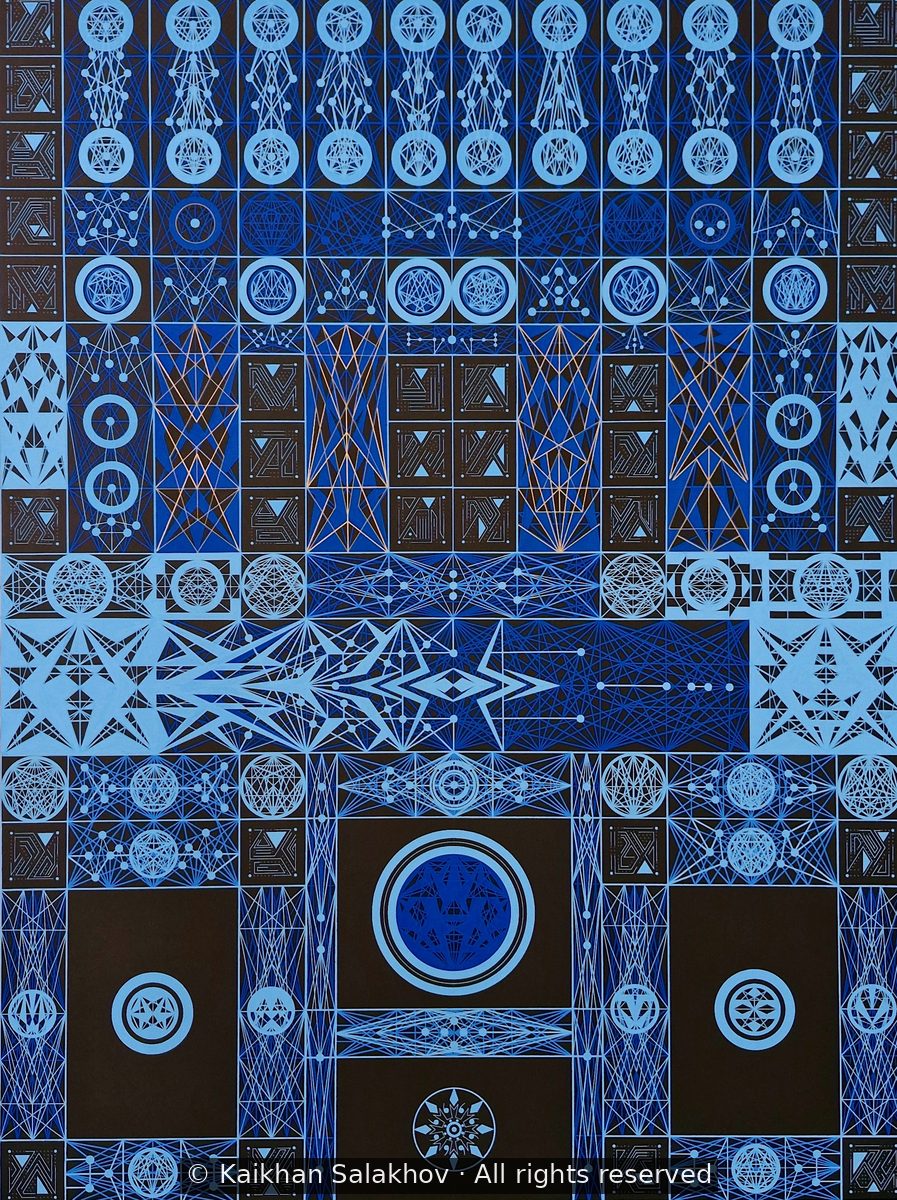
Beyond Species-Centric Classification
Recognition of unfamiliar life and intelligence without imposing human biological categories or assigning coordinates unsupported by evidence.
Read the full painting meaning →This question examines identity continuity. Alteration, duplication, or transfer of an agent can make persistence of identity and responsibility ambiguous. Its surrounding discussion also concerns conscious experience: the discussion depends on how experience is attributed to beings whose internal states may be inaccessible.
The analytical issue is how these conditions affect assumptions about knowledge, identity, reality, and the criteria used to justify conclusions. The node treats the potential dysfunction as an open problem: its identification does not demonstrate that the anticipated outcome will occur or that an assumed technology is feasible.
Main problem
Alteration, duplication, or transfer of an agent can make persistence of identity and responsibility ambiguous.
Central question
What criteria would distinguish continued personal identity from a separate agent with similar information?
Analytical connections
Worldview / Philosophy
For this identity continuity problem, worldview / philosophy examines assumptions about knowledge, identity, reality, and the criteria used to justify conclusions.
Consciousness / Psychology
For this identity continuity problem, consciousness / psychology examines subjective experience, identity, agency, and the psychological effects of the scenario.
Religion / Spirituality / Ultimate Meaning
For this identity continuity problem, religion / spirituality / ultimate meaning examines belief communities, religious authority, continuity of meaning, and freedom of interpretation.
Ethics / Moral Consideration
For this identity continuity problem, ethics / moral consideration examines consent, exposure to harm, unequal treatment, and the scope of moral protection.
Cognitive Architecture
For this identity continuity problem, cognitive architecture examines information processing, decision formation, shared cognition, and limits of interpretation.
Social Structure
For this identity continuity problem, social structure examines group membership, social differentiation, cohesion, and the distribution of roles.
Original source prose and question wording remain in the book. The summary and central question are analytical restatements; the author’s complete wording remains in the cited source.
ASX positions and scientific context
- P8 scope
- C position: not established
- Speculative scenario
Physical scope and coordination themes describe fields of inquiry. They do not establish a measured capability or scientific validation.
Cross-domain dependencies
Conditional analytical comparisons; question-level access follows the parent discussion.
Exclusion, segregation and conflict / Regulation across heterogeneous systems
Exclusionary classifications or doctrines can legitimate segregation and coercion. Conflict and coercive governance can in turn intensify mistrust and separation. These are conditional feedback mechanisms, not inevitable consequences of cultural difference.
Different legal and regulatory assumptions can obstruct cooperation, maintenance, migration or technology exchange. The comparison concerns compatibility of authority and obligations, not proof that one legal design is universally appropriate.
ASX-68-005: The First Rule of the School of the Universe — Do Not Be Afraid, pp. 668–669; ASX-78-007: Multiversal Cosmogeopolitical Games. The Identity of Universes and the Currency of Existence, pp. 796–798.
Open ASX-78-007Exclusion, segregation and conflict / Regulation across heterogeneous systems
Exclusionary classifications or doctrines can legitimate segregation and coercion. Conflict and coercive governance can in turn intensify mistrust and separation. These are conditional feedback mechanisms, not inevitable consequences of cultural difference.
Different legal and regulatory assumptions can obstruct cooperation, maintenance, migration or technology exchange. The comparison concerns compatibility of authority and obligations, not proof that one legal design is universally appropriate.
ASX-68-005: The First Rule of the School of the Universe — Do Not Be Afraid, pp. 668–669; ASX-78-010: Multiversal Hierarchy. Architectural Segregation and Abduction of Universes in a Cosmogeopolitical Scene, pp. 801–803.
Open ASX-78-010Exclusion, segregation and conflict / Technical and cognitive interoperability
Exclusionary classifications or doctrines can legitimate segregation and coercion. Conflict and coercive governance can in turn intensify mistrust and separation. These are conditional feedback mechanisms, not inevitable consequences of cultural difference.
Interoperation depends on compatible interfaces and sufficiently shared interpretations. Standards, translation and access arrangements affect cooperation, while biological and cognitive differences can change what a usable interface requires.
ASX-58-001: Astral Space Exploration. The Fundamentals of Cosmocybernetics. General Management, Mind, and Messages, pp. 544–550; ASX-68-005: The First Rule of the School of the Universe — Do Not Be Afraid, pp. 668–669.
Open ASX-58-001Technical and cognitive interoperability / Regulation across heterogeneous systems
Interoperation depends on compatible interfaces and sufficiently shared interpretations. Standards, translation and access arrangements affect cooperation, while biological and cognitive differences can change what a usable interface requires.
Different legal and regulatory assumptions can obstruct cooperation, maintenance, migration or technology exchange. The comparison concerns compatibility of authority and obligations, not proof that one legal design is universally appropriate.
ASX-28-014: Orange/Multiplicative Civilizations. Innovation and Increase of Survival, pp. 197–198; ASX-68-005: The First Rule of the School of the Universe — Do Not Be Afraid, pp. 668–669.
Open ASX-28-014Technical and cognitive interoperability / Regulation across heterogeneous systems
Interoperation depends on compatible interfaces and sufficiently shared interpretations. Standards, translation and access arrangements affect cooperation, while biological and cognitive differences can change what a usable interface requires.
Different legal and regulatory assumptions can obstruct cooperation, maintenance, migration or technology exchange. The comparison concerns compatibility of authority and obligations, not proof that one legal design is universally appropriate.
ASX-28-022: Cosmic Consciousness. An Unavoidable Role in Play Beyond Definition, Measurement, or Model, pp. 205–208; ASX-68-005: The First Rule of the School of the Universe — Do Not Be Afraid, pp. 668–669.
Open ASX-28-022Technical and cognitive interoperability / Regulation across heterogeneous systems
Interoperation depends on compatible interfaces and sufficiently shared interpretations. Standards, translation and access arrangements affect cooperation, while biological and cognitive differences can change what a usable interface requires.
Different legal and regulatory assumptions can obstruct cooperation, maintenance, migration or technology exchange. The comparison concerns compatibility of authority and obligations, not proof that one legal design is universally appropriate.
ASX-48-001: Universal Integration of Data and Analysis. Robotics and Cosmic Engineering to the Universal Level, pp. 413–415; ASX-68-005: The First Rule of the School of the Universe — Do Not Be Afraid, pp. 668–669.
Open ASX-48-001Technical and cognitive interoperability / Regulation across heterogeneous systems
Interoperation depends on compatible interfaces and sufficiently shared interpretations. Standards, translation and access arrangements affect cooperation, while biological and cognitive differences can change what a usable interface requires.
Different legal and regulatory assumptions can obstruct cooperation, maintenance, migration or technology exchange. The comparison concerns compatibility of authority and obligations, not proof that one legal design is universally appropriate.
ASX-48-008: Multiverse Conflicts and Coexistence with Non-Technological Civilizations, pp. 429–431; ASX-68-005: The First Rule of the School of the Universe — Do Not Be Afraid, pp. 668–669.
Open ASX-48-008Technical and cognitive interoperability / Regulation across heterogeneous systems
Interoperation depends on compatible interfaces and sufficiently shared interpretations. Standards, translation and access arrangements affect cooperation, while biological and cognitive differences can change what a usable interface requires.
Different legal and regulatory assumptions can obstruct cooperation, maintenance, migration or technology exchange. The comparison concerns compatibility of authority and obligations, not proof that one legal design is universally appropriate.
ASX-58-002: Astral Space Exploration. The Fundamentals of Cosmocybernetics. Galactical Filaments. Quantum and Cosmic Engineering. Galactical Drifts, Voids, and the Future of the Universe, pp. 550–555; ASX-68-005: The First Rule of the School of the Universe — Do Not Be Afraid, pp. 668–669.
Open ASX-58-002Associated paintings
- Astral Space Exploration: The Cosmic Meditation
- Astral Space Exploration: The Cosmic Illumination
- Astral Space Exploration: The Kosmopolis
- Astral Space Exploration: The Connection to the Cosmic Library
- Astral Space Exploration: The Multidimensional Crossgalactic Communication
- Astral Space Exploration: The Multidimensional Interuniversal Communication
- Astral Space Exploration: The Gnosis
- Astral Space Exploration: Homo Kosmicus. Part I
- Astral Space Exploration: Homo Kosmicus. Part II
- Astral Space Exploration: The Cosmic Love
- Astral Space Exploration: The Observation of the Worlds
- Beyond Species-Centric Classification
- Culture Across Life Forms
Source organization
- part of: ASX-68-005
Citation
Kaikhan Salakhov (2024). Astral Space Exploration: The Cosmic Renaissance: The Fundamental Principles of Cosmocybernetics. Part VI, “Astral Space Exploration Grid: Xenoanthropology Through Stages of Development”; Chapter 8, “The Universal Stage”; discussion: “The First Rule of the School of the Universe — Do Not Be Afraid”; question 3, p. 669. Page references follow the supplied 852-page edition; pagination in other editions may differ. Library reference: ASX-68-005-Q03. https://www.asxgrid.app/library/records/ASX-68-005-Q03.html
Page references follow the supplied 852-page edition; pagination in other editions may differ..
Book publication: . Map created: . Map revised: .