Avoiding Galactic Balkanization and Fragmentation. The AQAL Framework Constructing an Adaptive Pattern of Interstellar Governance / Question 6
ASX-55-006-Q06 · Part V · Space Exploration · Chapter 5: The Galactic Stage
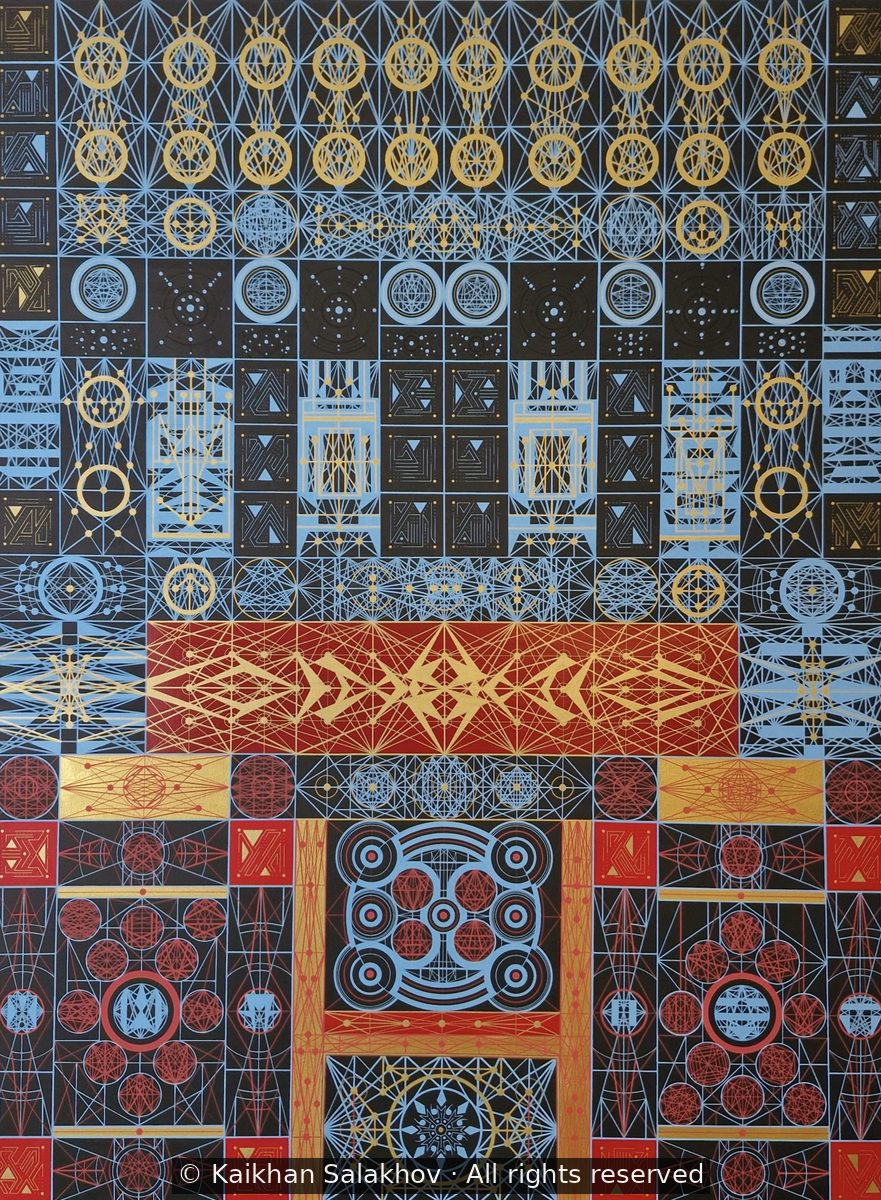
Cosmogeopolitics Across Life Forms
Political coordination, unequal resources and local autonomy under spatial separation and communication constraints.
Read the full painting meaning →This question examines knowledge reliability. A community’s decisions depend on whether its information and explanatory claims can be checked and corrected. Its surrounding discussion also concerns communication access: control over channels can determine which groups receive information and which remain excluded.
The analytical issue is how these conditions affect assumptions about knowledge, identity, reality, and the criteria used to justify conclusions. The node treats the potential dysfunction as an open problem: its identification does not demonstrate that the anticipated outcome will occur or that an assumed technology is feasible.
Main problem
A community’s decisions depend on whether its information and explanatory claims can be checked and corrected.
Central question
What procedures could distinguish reliable knowledge from persuasive but unsupported claims?
Analytical connections
Worldview / Philosophy
For this knowledge reliability problem, worldview / philosophy examines assumptions about knowledge, identity, reality, and the criteria used to justify conclusions.
Governance
For this knowledge reliability problem, governance examines decision rights, oversight, institutional responsibility, and mechanisms for challenging authority.
Physical Capability (Reach)
For this knowledge reliability problem, physical capability (reach) examines the spatial boundary of operations, dependence between locations, and delays affecting intervention.
Technology
For this knowledge reliability problem, technology examines the proposed mechanism, technical dependencies, control interfaces, and failure conditions.
Consciousness / Psychology
For this knowledge reliability problem, consciousness / psychology examines subjective experience, identity, agency, and the psychological effects of the scenario.
Social Structure
For this knowledge reliability problem, social structure examines group membership, social differentiation, cohesion, and the distribution of roles.
Resource Allocation / Economy
For this knowledge reliability problem, resource allocation / economy examines ownership, access to scarce inputs, dependency, and incentives affecting allocation.
Contact Disposition
For this knowledge reliability problem, contact disposition examines relations between groups, conflict escalation, cooperation, and responses to unfamiliar agents.
Communication
For this knowledge reliability problem, communication examines message access, authenticity, interpretation, delay, and the integrity of exchanged information.
Cognitive Architecture
For this knowledge reliability problem, cognitive architecture examines information processing, decision formation, shared cognition, and limits of interpretation.
Original source prose and question wording remain in the book. The summary and central question are analytical restatements; the author’s complete wording remains in the cited source.
ASX positions and scientific context
- P4 scope
- P5 scope
- C3 thematic relevance
- C6 thematic relevance
- C position: not established
- Speculative scenario
Physical scope and coordination themes describe fields of inquiry. They do not establish a measured capability or scientific validation.
Cross-domain dependencies
Conditional analytical comparisons; question-level access follows the parent discussion.
Control of communication infrastructure / Ecological intervention and habitation / Resource access and concentration of power / Technical and cognitive interoperability / Infrastructure and strategic conflict / System failure and recovery
An operator who controls access, routing or records can change what other institutions can verify and communicate. Political safeguards and ownership rules in turn determine who can exercise this control.
Habitats and life-support systems depend on environmental conditions; engineering and resource extraction can change those conditions. Institutional priorities determine acceptable interventions, whose consequences can then alter settlement viability and social choices.
Unequal access to energy, technology, transport or information can create dependence and unequal bargaining power. Institutions and dominant operators may reinforce or reduce the same inequalities through allocation and access rules.
Interoperation depends on compatible interfaces and sufficiently shared interpretations. Standards, translation and access arrangements affect cooperation, while biological and cognitive differences can change what a usable interface requires.
Infrastructure can become both a strategic asset and a target. Conflict may disrupt energy, transport or communications, while dependence on those services can be exploited to constrain decisions.
A technical failure can propagate into dependent services and institutions when redundancy and recovery are insufficient. The comparison preserves the distinction between ordinary reliability problems and the speculative mechanisms in individual source scenarios.
ASX-35-003: Simulations as a Means of Control and Subjugation, pp. 265–267; ASX-55-006: Avoiding Galactic Balkanization and Fragmentation. The AQAL Framework Constructing an Adaptive Pattern of Interstellar Governance, pp. 487–489.
Open ASX-35-003Ecological intervention and habitation / Knowledge and cultural continuity / Resource access and concentration of power / Technical and cognitive interoperability / Infrastructure and strategic conflict / System failure and recovery
Habitats and life-support systems depend on environmental conditions; engineering and resource extraction can change those conditions. Institutional priorities determine acceptable interventions, whose consequences can then alter settlement viability and social choices.
Continuity depends on storage, interpretation, education and communication. Changes to those systems can alter shared knowledge, while communities and institutions decide which records and practices are preserved or excluded.
Unequal access to energy, technology, transport or information can create dependence and unequal bargaining power. Institutions and dominant operators may reinforce or reduce the same inequalities through allocation and access rules.
Interoperation depends on compatible interfaces and sufficiently shared interpretations. Standards, translation and access arrangements affect cooperation, while biological and cognitive differences can change what a usable interface requires.
Infrastructure can become both a strategic asset and a target. Conflict may disrupt energy, transport or communications, while dependence on those services can be exploited to constrain decisions.
A technical failure can propagate into dependent services and institutions when redundancy and recovery are insufficient. The comparison preserves the distinction between ordinary reliability problems and the speculative mechanisms in individual source scenarios.
ASX-55-006: Avoiding Galactic Balkanization and Fragmentation. The AQAL Framework Constructing an Adaptive Pattern of Interstellar Governance, pp. 487–489; ASX-75-011: The Galactic Fragility, the Omni-Prevailing Influence of Systemic Breakdowns, Space-Time Anomalies, and Technocentric Bugs within Cosmogeopolitical Structures, pp. 752–754.
Open ASX-75-011Control of communication infrastructure / Ecological intervention and habitation / Resource access and concentration of power / Infrastructure and strategic conflict / System failure and recovery
An operator who controls access, routing or records can change what other institutions can verify and communicate. Political safeguards and ownership rules in turn determine who can exercise this control.
Habitats and life-support systems depend on environmental conditions; engineering and resource extraction can change those conditions. Institutional priorities determine acceptable interventions, whose consequences can then alter settlement viability and social choices.
Unequal access to energy, technology, transport or information can create dependence and unequal bargaining power. Institutions and dominant operators may reinforce or reduce the same inequalities through allocation and access rules.
Infrastructure can become both a strategic asset and a target. Conflict may disrupt energy, transport or communications, while dependence on those services can be exploited to constrain decisions.
A technical failure can propagate into dependent services and institutions when redundancy and recovery are insufficient. The comparison preserves the distinction between ordinary reliability problems and the speculative mechanisms in individual source scenarios.
ASX-55-006: Avoiding Galactic Balkanization and Fragmentation. The AQAL Framework Constructing an Adaptive Pattern of Interstellar Governance, pp. 487–489; ASX-75-006: Cosmic Engineering. An Instrument of Cosmopolitical Games, pp. 741–743.
Open ASX-75-006Ecological intervention and habitation / Knowledge and cultural continuity / Resource access and concentration of power / Technical and cognitive interoperability / System failure and recovery
Habitats and life-support systems depend on environmental conditions; engineering and resource extraction can change those conditions. Institutional priorities determine acceptable interventions, whose consequences can then alter settlement viability and social choices.
Continuity depends on storage, interpretation, education and communication. Changes to those systems can alter shared knowledge, while communities and institutions decide which records and practices are preserved or excluded.
Unequal access to energy, technology, transport or information can create dependence and unequal bargaining power. Institutions and dominant operators may reinforce or reduce the same inequalities through allocation and access rules.
Interoperation depends on compatible interfaces and sufficiently shared interpretations. Standards, translation and access arrangements affect cooperation, while biological and cognitive differences can change what a usable interface requires.
A technical failure can propagate into dependent services and institutions when redundancy and recovery are insufficient. The comparison preserves the distinction between ordinary reliability problems and the speculative mechanisms in individual source scenarios.
ASX-55-006: Avoiding Galactic Balkanization and Fragmentation. The AQAL Framework Constructing an Adaptive Pattern of Interstellar Governance, pp. 487–489; ASX-65-007: The Role of the Xenoanthropologists in Missions to Deep Space, Galactic Colonization, and Terraforming, pp. 631–632.
Open ASX-65-007Ecological intervention and habitation / Knowledge and cultural continuity / Technical and cognitive interoperability / Infrastructure and strategic conflict / System failure and recovery
Habitats and life-support systems depend on environmental conditions; engineering and resource extraction can change those conditions. Institutional priorities determine acceptable interventions, whose consequences can then alter settlement viability and social choices.
Continuity depends on storage, interpretation, education and communication. Changes to those systems can alter shared knowledge, while communities and institutions decide which records and practices are preserved or excluded.
Interoperation depends on compatible interfaces and sufficiently shared interpretations. Standards, translation and access arrangements affect cooperation, while biological and cognitive differences can change what a usable interface requires.
Infrastructure can become both a strategic asset and a target. Conflict may disrupt energy, transport or communications, while dependence on those services can be exploited to constrain decisions.
A technical failure can propagate into dependent services and institutions when redundancy and recovery are insufficient. The comparison preserves the distinction between ordinary reliability problems and the speculative mechanisms in individual source scenarios.
ASX-55-006: Avoiding Galactic Balkanization and Fragmentation. The AQAL Framework Constructing an Adaptive Pattern of Interstellar Governance, pp. 487–489; ASX-65-002: Xenocultural Architecture and Technological Expression Throughout the Galactic Stage. An Indepth Look into Structural Aesthetics, Consciousness and Environmental Accommodation, pp. 619–622.
Open ASX-65-002Knowledge and cultural continuity / Resource access and concentration of power / Technical and cognitive interoperability / Infrastructure and strategic conflict / System failure and recovery
Continuity depends on storage, interpretation, education and communication. Changes to those systems can alter shared knowledge, while communities and institutions decide which records and practices are preserved or excluded.
Unequal access to energy, technology, transport or information can create dependence and unequal bargaining power. Institutions and dominant operators may reinforce or reduce the same inequalities through allocation and access rules.
Interoperation depends on compatible interfaces and sufficiently shared interpretations. Standards, translation and access arrangements affect cooperation, while biological and cognitive differences can change what a usable interface requires.
Infrastructure can become both a strategic asset and a target. Conflict may disrupt energy, transport or communications, while dependence on those services can be exploited to constrain decisions.
A technical failure can propagate into dependent services and institutions when redundancy and recovery are insufficient. The comparison preserves the distinction between ordinary reliability problems and the speculative mechanisms in individual source scenarios.
ASX-45-013: Unknown Extraterrestrial Technologies Integration: Challenges and Opportunities on the Galactic Stage, pp. 366–368; ASX-55-006: Avoiding Galactic Balkanization and Fragmentation. The AQAL Framework Constructing an Adaptive Pattern of Interstellar Governance, pp. 487–489.
Open ASX-45-013Ecological intervention and habitation / Resource access and concentration of power / Technical and cognitive interoperability / Infrastructure and strategic conflict / System failure and recovery
Habitats and life-support systems depend on environmental conditions; engineering and resource extraction can change those conditions. Institutional priorities determine acceptable interventions, whose consequences can then alter settlement viability and social choices.
Unequal access to energy, technology, transport or information can create dependence and unequal bargaining power. Institutions and dominant operators may reinforce or reduce the same inequalities through allocation and access rules.
Interoperation depends on compatible interfaces and sufficiently shared interpretations. Standards, translation and access arrangements affect cooperation, while biological and cognitive differences can change what a usable interface requires.
Infrastructure can become both a strategic asset and a target. Conflict may disrupt energy, transport or communications, while dependence on those services can be exploited to constrain decisions.
A technical failure can propagate into dependent services and institutions when redundancy and recovery are insufficient. The comparison preserves the distinction between ordinary reliability problems and the speculative mechanisms in individual source scenarios.
ASX-45-001: Transplanet Infrastructure. Development of Cosmic Megastructures, the Technological Approach, pp. 345–347; ASX-55-006: Avoiding Galactic Balkanization and Fragmentation. The AQAL Framework Constructing an Adaptive Pattern of Interstellar Governance, pp. 487–489.
Open ASX-45-001Control of communication infrastructure / Ecological intervention and habitation / System failure and recovery
An operator who controls access, routing or records can change what other institutions can verify and communicate. Political safeguards and ownership rules in turn determine who can exercise this control.
Habitats and life-support systems depend on environmental conditions; engineering and resource extraction can change those conditions. Institutional priorities determine acceptable interventions, whose consequences can then alter settlement viability and social choices.
A technical failure can propagate into dependent services and institutions when redundancy and recovery are insufficient. The comparison preserves the distinction between ordinary reliability problems and the speculative mechanisms in individual source scenarios.
ASX-25-003: Real-time Remote Governing of Star System Boundaries, pp. 139–140; ASX-55-006: Avoiding Galactic Balkanization and Fragmentation. The AQAL Framework Constructing an Adaptive Pattern of Interstellar Governance, pp. 487–489.
Open ASX-25-003Control of communication infrastructure / Resource access and concentration of power / System failure and recovery
An operator who controls access, routing or records can change what other institutions can verify and communicate. Political safeguards and ownership rules in turn determine who can exercise this control.
Unequal access to energy, technology, transport or information can create dependence and unequal bargaining power. Institutions and dominant operators may reinforce or reduce the same inequalities through allocation and access rules.
A technical failure can propagate into dependent services and institutions when redundancy and recovery are insufficient. The comparison preserves the distinction between ordinary reliability problems and the speculative mechanisms in individual source scenarios.
ASX-25-023: Impact of Quantum Communication and Transportation Technologies, pp. 149–149; ASX-55-006: Avoiding Galactic Balkanization and Fragmentation. The AQAL Framework Constructing an Adaptive Pattern of Interstellar Governance, pp. 487–489.
Open ASX-25-023Control of communication infrastructure / Technical and cognitive interoperability / Infrastructure and strategic conflict
An operator who controls access, routing or records can change what other institutions can verify and communicate. Political safeguards and ownership rules in turn determine who can exercise this control.
Interoperation depends on compatible interfaces and sufficiently shared interpretations. Standards, translation and access arrangements affect cooperation, while biological and cognitive differences can change what a usable interface requires.
Infrastructure can become both a strategic asset and a target. Conflict may disrupt energy, transport or communications, while dependence on those services can be exploited to constrain decisions.
ASX-15-001: Ever-Diverse, Varied, and Emergent Spiritual Practices Across Galactic Regions, pp. 43–43; ASX-55-006: Avoiding Galactic Balkanization and Fragmentation. The AQAL Framework Constructing an Adaptive Pattern of Interstellar Governance, pp. 487–489.
Open ASX-15-001Control of communication infrastructure / Technical and cognitive interoperability / Infrastructure and strategic conflict
An operator who controls access, routing or records can change what other institutions can verify and communicate. Political safeguards and ownership rules in turn determine who can exercise this control.
Interoperation depends on compatible interfaces and sufficiently shared interpretations. Standards, translation and access arrangements affect cooperation, while biological and cognitive differences can change what a usable interface requires.
Infrastructure can become both a strategic asset and a target. Conflict may disrupt energy, transport or communications, while dependence on those services can be exploited to constrain decisions.
ASX-15-003: The Role of Spiritual Interstellar Diplomacy, pp. 43–43; ASX-55-006: Avoiding Galactic Balkanization and Fragmentation. The AQAL Framework Constructing an Adaptive Pattern of Interstellar Governance, pp. 487–489.
Open ASX-15-003Ecological intervention and habitation / Knowledge and cultural continuity / Resource access and concentration of power
Habitats and life-support systems depend on environmental conditions; engineering and resource extraction can change those conditions. Institutional priorities determine acceptable interventions, whose consequences can then alter settlement viability and social choices.
Continuity depends on storage, interpretation, education and communication. Changes to those systems can alter shared knowledge, while communities and institutions decide which records and practices are preserved or excluded.
Unequal access to energy, technology, transport or information can create dependence and unequal bargaining power. Institutions and dominant operators may reinforce or reduce the same inequalities through allocation and access rules.
ASX-35-002: Simulating Entire Galaxies and Digital Universes, pp. 264–265; ASX-55-006: Avoiding Galactic Balkanization and Fragmentation. The AQAL Framework Constructing an Adaptive Pattern of Interstellar Governance, pp. 487–489.
Open ASX-35-002Ecological intervention and habitation / Knowledge and cultural continuity / Technical and cognitive interoperability / Infrastructure and strategic conflict
Habitats and life-support systems depend on environmental conditions; engineering and resource extraction can change those conditions. Institutional priorities determine acceptable interventions, whose consequences can then alter settlement viability and social choices.
Continuity depends on storage, interpretation, education and communication. Changes to those systems can alter shared knowledge, while communities and institutions decide which records and practices are preserved or excluded.
Interoperation depends on compatible interfaces and sufficiently shared interpretations. Standards, translation and access arrangements affect cooperation, while biological and cognitive differences can change what a usable interface requires.
Infrastructure can become both a strategic asset and a target. Conflict may disrupt energy, transport or communications, while dependence on those services can be exploited to constrain decisions.
ASX-55-006: Avoiding Galactic Balkanization and Fragmentation. The AQAL Framework Constructing an Adaptive Pattern of Interstellar Governance, pp. 487–489; ASX-65-003: Systems of Non-Verbal Communication. The Contribution of Xenoanthropology to the Decoding of Alternative Ways of Communication, pp. 622–624.
Open ASX-65-003Ecological intervention and habitation / Knowledge and cultural continuity / Resource access and concentration of power
Habitats and life-support systems depend on environmental conditions; engineering and resource extraction can change those conditions. Institutional priorities determine acceptable interventions, whose consequences can then alter settlement viability and social choices.
Continuity depends on storage, interpretation, education and communication. Changes to those systems can alter shared knowledge, while communities and institutions decide which records and practices are preserved or excluded.
Unequal access to energy, technology, transport or information can create dependence and unequal bargaining power. Institutions and dominant operators may reinforce or reduce the same inequalities through allocation and access rules.
ASX-25-006: The Kardashev Scale. Its Limitations with Respect to Consciousness, Diversity, and Galactic Developmental Complexity, pp. 140–142; ASX-55-006: Avoiding Galactic Balkanization and Fragmentation. The AQAL Framework Constructing an Adaptive Pattern of Interstellar Governance, pp. 487–489.
Open ASX-25-006Ecological intervention and habitation / Technical and cognitive interoperability
Habitats and life-support systems depend on environmental conditions; engineering and resource extraction can change those conditions. Institutional priorities determine acceptable interventions, whose consequences can then alter settlement viability and social choices.
Interoperation depends on compatible interfaces and sufficiently shared interpretations. Standards, translation and access arrangements affect cooperation, while biological and cognitive differences can change what a usable interface requires.
ASX-25-002: Galactic-Scale Energy Management, pp. 139–139; ASX-55-006: Avoiding Galactic Balkanization and Fragmentation. The AQAL Framework Constructing an Adaptive Pattern of Interstellar Governance, pp. 487–489.
Open ASX-25-002Ecological intervention and habitation / Knowledge and cultural continuity / Resource access and concentration of power
Habitats and life-support systems depend on environmental conditions; engineering and resource extraction can change those conditions. Institutional priorities determine acceptable interventions, whose consequences can then alter settlement viability and social choices.
Continuity depends on storage, interpretation, education and communication. Changes to those systems can alter shared knowledge, while communities and institutions decide which records and practices are preserved or excluded.
Unequal access to energy, technology, transport or information can create dependence and unequal bargaining power. Institutions and dominant operators may reinforce or reduce the same inequalities through allocation and access rules.
ASX-15-026: Spiritual Exploitation and the Black Market for Sacred Resources, pp. 50–50; ASX-55-006: Avoiding Galactic Balkanization and Fragmentation. The AQAL Framework Constructing an Adaptive Pattern of Interstellar Governance, pp. 487–489.
Open ASX-15-026Ecological intervention and habitation / Technical and cognitive interoperability / Infrastructure and strategic conflict
Habitats and life-support systems depend on environmental conditions; engineering and resource extraction can change those conditions. Institutional priorities determine acceptable interventions, whose consequences can then alter settlement viability and social choices.
Interoperation depends on compatible interfaces and sufficiently shared interpretations. Standards, translation and access arrangements affect cooperation, while biological and cognitive differences can change what a usable interface requires.
Infrastructure can become both a strategic asset and a target. Conflict may disrupt energy, transport or communications, while dependence on those services can be exploited to constrain decisions.
ASX-15-018: Spiritual Power Lost Through Decentralization, pp. 47–47; ASX-55-006: Avoiding Galactic Balkanization and Fragmentation. The AQAL Framework Constructing an Adaptive Pattern of Interstellar Governance, pp. 487–489.
Open ASX-15-018Ecological intervention and habitation / Resource access and concentration of power / System failure and recovery
Habitats and life-support systems depend on environmental conditions; engineering and resource extraction can change those conditions. Institutional priorities determine acceptable interventions, whose consequences can then alter settlement viability and social choices.
Unequal access to energy, technology, transport or information can create dependence and unequal bargaining power. Institutions and dominant operators may reinforce or reduce the same inequalities through allocation and access rules.
A technical failure can propagate into dependent services and institutions when redundancy and recovery are insufficient. The comparison preserves the distinction between ordinary reliability problems and the speculative mechanisms in individual source scenarios.
ASX-25-012: Black Hole Manipulation. Power Generation, Mastery Over Economics, pp. 144–145; ASX-55-006: Avoiding Galactic Balkanization and Fragmentation. The AQAL Framework Constructing an Adaptive Pattern of Interstellar Governance, pp. 487–489.
Open ASX-25-012Ecological intervention and habitation / System failure and recovery
Habitats and life-support systems depend on environmental conditions; engineering and resource extraction can change those conditions. Institutional priorities determine acceptable interventions, whose consequences can then alter settlement viability and social choices.
A technical failure can propagate into dependent services and institutions when redundancy and recovery are insufficient. The comparison preserves the distinction between ordinary reliability problems and the speculative mechanisms in individual source scenarios.
ASX-25-039: Biomechanical Mutations. Unintended Consequences in Hybrid Life Forms, pp. 154–155; ASX-55-006: Avoiding Galactic Balkanization and Fragmentation. The AQAL Framework Constructing an Adaptive Pattern of Interstellar Governance, pp. 487–489.
Open ASX-25-039Associated paintings
Source organization
- part of: ASX-55-006
Citation
Kaikhan Salakhov (2024). Astral Space Exploration: The Cosmic Renaissance: The Fundamental Principles of Cosmocybernetics. Part V, “Astral Space Exploration Grid: Space Exploration Through Stages of Development”; Chapter 5, “The Galactic Stage”; discussion: “Avoiding Galactic Balkanization and Fragmentation. The AQAL Framework Constructing an Adaptive Pattern of Interstellar Governance”; question 6, p. 489. Page references follow the supplied 852-page edition; pagination in other editions may differ. Library reference: ASX-55-006-Q06. https://www.asxgrid.app/library/records/ASX-55-006-Q06.html
Page references follow the supplied 852-page edition; pagination in other editions may differ..
Book publication: . Map created: . Map revised: .