Fragmented Legal and Regulatory Frameworks. Masters of Galactic Governance in All its Complexity / Question 5
ASX-44-008-Q05 · Part IV · Interstellar Robotics Technologies · Chapter 4: The Transplanetary Stage
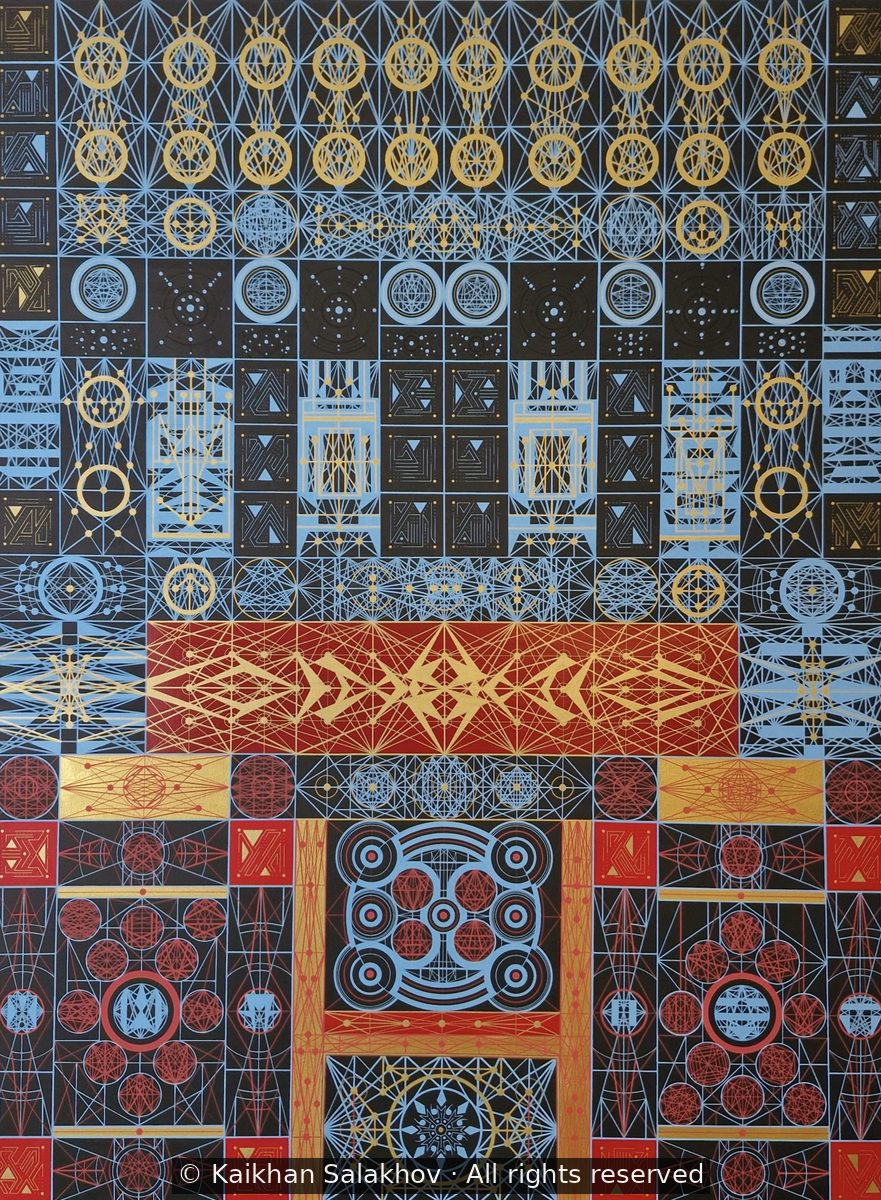
Cosmogeopolitics Across Life Forms
Political coordination, unequal resources and local autonomy under spatial separation and communication constraints.
Read the full painting meaning →This question examines galactic coordination. Distributed activity across a galaxy raises problems of delayed information, institutional divergence, and local autonomy. Its surrounding discussion also concerns cognitive autonomy: external intervention in cognition can undermine an agent’s ability to form or revise its own decisions.
The analytical issue is how these conditions affect decision rights, oversight, institutional responsibility, and mechanisms for challenging authority. The node treats the potential dysfunction as an open problem: its identification does not demonstrate that the anticipated outcome will occur or that an assumed technology is feasible.
Main problem
Distributed activity across a galaxy raises problems of delayed information, institutional divergence, and local autonomy.
Central question
What forms of coordination could remain meaningful across such extensive spatial separation?
Analytical connections
Governance
For this galactic coordination problem, governance examines decision rights, oversight, institutional responsibility, and mechanisms for challenging authority.
Resource Allocation / Economy
For this galactic coordination problem, resource allocation / economy examines ownership, access to scarce inputs, dependency, and incentives affecting allocation.
Ethics / Moral Consideration
For this galactic coordination problem, ethics / moral consideration examines consent, exposure to harm, unequal treatment, and the scope of moral protection.
Worldview / Philosophy
For this galactic coordination problem, worldview / philosophy examines assumptions about knowledge, identity, reality, and the criteria used to justify conclusions.
Social Structure
For this galactic coordination problem, social structure examines group membership, social differentiation, cohesion, and the distribution of roles.
Contact Disposition
For this galactic coordination problem, contact disposition examines relations between groups, conflict escalation, cooperation, and responses to unfamiliar agents.
Physical Capability (Reach)
For this galactic coordination problem, physical capability (reach) examines the spatial boundary of operations, dependence between locations, and delays affecting intervention.
Technology
For this galactic coordination problem, technology examines the proposed mechanism, technical dependencies, control interfaces, and failure conditions.
Original source prose and question wording remain in the book. The summary and central question are analytical restatements; the author’s complete wording remains in the cited source.
ASX positions and scientific context
- P4 scope
- P5 scope
- C4 thematic relevance
- C6 thematic relevance
- C position: not established
- Speculative scenario
Physical scope and coordination themes describe fields of inquiry. They do not establish a measured capability or scientific validation.
Cross-domain dependencies
Conditional analytical comparisons; question-level access follows the parent discussion.
Regulation across heterogeneous systems
Different legal and regulatory assumptions can obstruct cooperation, maintenance, migration or technology exchange. The comparison concerns compatibility of authority and obligations, not proof that one legal design is universally appropriate.
ASX-24-003: Regulatory Frameworks in the Transplanetary Stage. Harmonization of Cosmic Engineering with Diverse Consciousnesses, Civilizations, and Types of Kardashev, pp. 124–125; ASX-44-008: Fragmented Legal and Regulatory Frameworks. Masters of Galactic Governance in All its Complexity, pp. 332–333.
Open ASX-24-003Regulation across heterogeneous systems
Different legal and regulatory assumptions can obstruct cooperation, maintenance, migration or technology exchange. The comparison concerns compatibility of authority and obligations, not proof that one legal design is universally appropriate.
ASX-24-023: Ethical Frameworks and Regulatory Challenges in Cosmic Engineering, pp. 133–133; ASX-44-008: Fragmented Legal and Regulatory Frameworks. Masters of Galactic Governance in All its Complexity, pp. 332–333.
Open ASX-24-023Regulation across heterogeneous systems
Different legal and regulatory assumptions can obstruct cooperation, maintenance, migration or technology exchange. The comparison concerns compatibility of authority and obligations, not proof that one legal design is universally appropriate.
ASX-44-008: Fragmented Legal and Regulatory Frameworks. Masters of Galactic Governance in All its Complexity, pp. 332–333; ASX-54-003: Adaptive and Inclusive Governance Systems. Integrating Stages of Consciousness into Transgalactic Expansion, pp. 471–473.
Open ASX-54-003Robotic regulation and multispecies governance
Fragmented regulation can obstruct shared operations or leave accountability gaps in robotic systems.
Inclusive governance determines whose requirements and protections technical rules must accommodate.
ASX-44-008: Fragmented Legal and Regulatory Frameworks. Masters of Galactic Governance in All its Complexity, pp. 332–333; ASX-64-001: Transspecie Governance Systems in a Transplanetary Phase. Inclusive Political Order-Formation Across Billions of Star Systems, pp. 593–595.
Open ASX-64-001Autonomy and control of artificial systems / Embodiment, identity and recognition / Technical and cognitive interoperability / Regulation across heterogeneous systems
Delegated machine authority can affect infrastructure, environmental interventions and coercive capability. Accountability, access controls and institutional incentives can also alter how autonomous systems are deployed.
Changes in embodiment, cognition or reproduction can challenge categories of identity and agency. Recognition rules and cultural expectations can then constrain access to enhancement, membership and protection. Unfamiliarity alone is not evidence of lesser moral status.
Interoperation depends on compatible interfaces and sufficiently shared interpretations. Standards, translation and access arrangements affect cooperation, while biological and cognitive differences can change what a usable interface requires.
Different legal and regulatory assumptions can obstruct cooperation, maintenance, migration or technology exchange. The comparison concerns compatibility of authority and obligations, not proof that one legal design is universally appropriate.
ASX-24-034: Cosmic Engineering as a Commodity, pp. 137–138; ASX-44-008: Fragmented Legal and Regulatory Frameworks. Masters of Galactic Governance in All its Complexity, pp. 332–333.
Open ASX-24-034Autonomy and control of artificial systems / Embodiment, identity and recognition / Technical and cognitive interoperability / Regulation across heterogeneous systems
Delegated machine authority can affect infrastructure, environmental interventions and coercive capability. Accountability, access controls and institutional incentives can also alter how autonomous systems are deployed.
Changes in embodiment, cognition or reproduction can challenge categories of identity and agency. Recognition rules and cultural expectations can then constrain access to enhancement, membership and protection. Unfamiliarity alone is not evidence of lesser moral status.
Interoperation depends on compatible interfaces and sufficiently shared interpretations. Standards, translation and access arrangements affect cooperation, while biological and cognitive differences can change what a usable interface requires.
Different legal and regulatory assumptions can obstruct cooperation, maintenance, migration or technology exchange. The comparison concerns compatibility of authority and obligations, not proof that one legal design is universally appropriate.
ASX-34-009: Quantum Simulations Locking Mechanisms, pp. 258–259; ASX-44-008: Fragmented Legal and Regulatory Frameworks. Masters of Galactic Governance in All its Complexity, pp. 332–333.
Open ASX-34-009Autonomy and control of artificial systems / Embodiment, identity and recognition / Technical and cognitive interoperability / Regulation across heterogeneous systems
Delegated machine authority can affect infrastructure, environmental interventions and coercive capability. Accountability, access controls and institutional incentives can also alter how autonomous systems are deployed.
Changes in embodiment, cognition or reproduction can challenge categories of identity and agency. Recognition rules and cultural expectations can then constrain access to enhancement, membership and protection. Unfamiliarity alone is not evidence of lesser moral status.
Interoperation depends on compatible interfaces and sufficiently shared interpretations. Standards, translation and access arrangements affect cooperation, while biological and cognitive differences can change what a usable interface requires.
Different legal and regulatory assumptions can obstruct cooperation, maintenance, migration or technology exchange. The comparison concerns compatibility of authority and obligations, not proof that one legal design is universally appropriate.
ASX-34-010: The Impact of Malfunctions and Bugs on Multiplanetary Simulation Networks, pp. 260–261; ASX-44-008: Fragmented Legal and Regulatory Frameworks. Masters of Galactic Governance in All its Complexity, pp. 332–333.
Open ASX-34-010Autonomy and control of artificial systems / Embodiment, identity and recognition / Technical and cognitive interoperability / Regulation across heterogeneous systems
Delegated machine authority can affect infrastructure, environmental interventions and coercive capability. Accountability, access controls and institutional incentives can also alter how autonomous systems are deployed.
Changes in embodiment, cognition or reproduction can challenge categories of identity and agency. Recognition rules and cultural expectations can then constrain access to enhancement, membership and protection. Unfamiliarity alone is not evidence of lesser moral status.
Interoperation depends on compatible interfaces and sufficiently shared interpretations. Standards, translation and access arrangements affect cooperation, while biological and cognitive differences can change what a usable interface requires.
Different legal and regulatory assumptions can obstruct cooperation, maintenance, migration or technology exchange. The comparison concerns compatibility of authority and obligations, not proof that one legal design is universally appropriate.
ASX-44-008: Fragmented Legal and Regulatory Frameworks. Masters of Galactic Governance in All its Complexity, pp. 332–333; ASX-54-001: The Transplanetary Stage. Challenges to Human Expansion Across Billions of Star Systems Within One Galaxy, pp. 468–469.
Open ASX-54-001Autonomy and control of artificial systems / Embodiment, identity and recognition / Technical and cognitive interoperability / Regulation across heterogeneous systems
Delegated machine authority can affect infrastructure, environmental interventions and coercive capability. Accountability, access controls and institutional incentives can also alter how autonomous systems are deployed.
Changes in embodiment, cognition or reproduction can challenge categories of identity and agency. Recognition rules and cultural expectations can then constrain access to enhancement, membership and protection. Unfamiliarity alone is not evidence of lesser moral status.
Interoperation depends on compatible interfaces and sufficiently shared interpretations. Standards, translation and access arrangements affect cooperation, while biological and cognitive differences can change what a usable interface requires.
Different legal and regulatory assumptions can obstruct cooperation, maintenance, migration or technology exchange. The comparison concerns compatibility of authority and obligations, not proof that one legal design is universally appropriate.
ASX-44-008: Fragmented Legal and Regulatory Frameworks. Masters of Galactic Governance in All its Complexity, pp. 332–333; ASX-74-001: Cosmogeopolitical Games of the Interstellar Great Powers at the Transplanetary Stage. Play at the Level of Billions of Star Systems, pp. 716–718.
Open ASX-74-001Autonomy and control of artificial systems / Embodiment, identity and recognition / Technical and cognitive interoperability / Regulation across heterogeneous systems
Delegated machine authority can affect infrastructure, environmental interventions and coercive capability. Accountability, access controls and institutional incentives can also alter how autonomous systems are deployed.
Changes in embodiment, cognition or reproduction can challenge categories of identity and agency. Recognition rules and cultural expectations can then constrain access to enhancement, membership and protection. Unfamiliarity alone is not evidence of lesser moral status.
Interoperation depends on compatible interfaces and sufficiently shared interpretations. Standards, translation and access arrangements affect cooperation, while biological and cognitive differences can change what a usable interface requires.
Different legal and regulatory assumptions can obstruct cooperation, maintenance, migration or technology exchange. The comparison concerns compatibility of authority and obligations, not proof that one legal design is universally appropriate.
ASX-44-008: Fragmented Legal and Regulatory Frameworks. Masters of Galactic Governance in All its Complexity, pp. 332–333; ASX-74-002: Transplanetary Proxy Wars — The Times of the Fading Terran Hegemony and The Disintegration Into Galactic Civilization, pp. 718–720.
Open ASX-74-002Autonomy and control of artificial systems / Embodiment, identity and recognition / Regulation across heterogeneous systems
Delegated machine authority can affect infrastructure, environmental interventions and coercive capability. Accountability, access controls and institutional incentives can also alter how autonomous systems are deployed.
Changes in embodiment, cognition or reproduction can challenge categories of identity and agency. Recognition rules and cultural expectations can then constrain access to enhancement, membership and protection. Unfamiliarity alone is not evidence of lesser moral status.
Different legal and regulatory assumptions can obstruct cooperation, maintenance, migration or technology exchange. The comparison concerns compatibility of authority and obligations, not proof that one legal design is universally appropriate.
ASX-44-008: Fragmented Legal and Regulatory Frameworks. Masters of Galactic Governance in All its Complexity, pp. 332–333; ASX-54-004: Cosmic Diversity. The Development of Civilization within the Wilber-Combs Lattice, pp. 473–475.
Open ASX-54-004Embodiment, identity and recognition / Technical and cognitive interoperability / Regulation across heterogeneous systems
Changes in embodiment, cognition or reproduction can challenge categories of identity and agency. Recognition rules and cultural expectations can then constrain access to enhancement, membership and protection. Unfamiliarity alone is not evidence of lesser moral status.
Interoperation depends on compatible interfaces and sufficiently shared interpretations. Standards, translation and access arrangements affect cooperation, while biological and cognitive differences can change what a usable interface requires.
Different legal and regulatory assumptions can obstruct cooperation, maintenance, migration or technology exchange. The comparison concerns compatibility of authority and obligations, not proof that one legal design is universally appropriate.
ASX-44-008: Fragmented Legal and Regulatory Frameworks. Masters of Galactic Governance in All its Complexity, pp. 332–333; ASX-64-005: Human Problems and Opportunities of Hybrid Life Forms and Societies within Galactic Civilization. A Xenoanthropological Perspective, pp. 601–603.
Open ASX-64-005Autonomy and control of artificial systems / Embodiment, identity and recognition / Technical and cognitive interoperability
Delegated machine authority can affect infrastructure, environmental interventions and coercive capability. Accountability, access controls and institutional incentives can also alter how autonomous systems are deployed.
Changes in embodiment, cognition or reproduction can challenge categories of identity and agency. Recognition rules and cultural expectations can then constrain access to enhancement, membership and protection. Unfamiliarity alone is not evidence of lesser moral status.
Interoperation depends on compatible interfaces and sufficiently shared interpretations. Standards, translation and access arrangements affect cooperation, while biological and cognitive differences can change what a usable interface requires.
ASX-24-001: Biological and Cultural Divergence. Architectural Preferences Forged in the Transplanetary Stage, pp. 122–123; ASX-44-008: Fragmented Legal and Regulatory Frameworks. Masters of Galactic Governance in All its Complexity, pp. 332–333.
Open ASX-24-001Autonomy and control of artificial systems / Technical and cognitive interoperability / Regulation across heterogeneous systems
Delegated machine authority can affect infrastructure, environmental interventions and coercive capability. Accountability, access controls and institutional incentives can also alter how autonomous systems are deployed.
Interoperation depends on compatible interfaces and sufficiently shared interpretations. Standards, translation and access arrangements affect cooperation, while biological and cognitive differences can change what a usable interface requires.
Different legal and regulatory assumptions can obstruct cooperation, maintenance, migration or technology exchange. The comparison concerns compatibility of authority and obligations, not proof that one legal design is universally appropriate.
ASX-14-020: The Avoidance of a Dark Future. An Ethical Blueprint for a Unified Civilization, pp. 42–42; ASX-44-008: Fragmented Legal and Regulatory Frameworks. Masters of Galactic Governance in All its Complexity, pp. 332–333.
Open ASX-14-020Embodiment, identity and recognition / Technical and cognitive interoperability
Changes in embodiment, cognition or reproduction can challenge categories of identity and agency. Recognition rules and cultural expectations can then constrain access to enhancement, membership and protection. Unfamiliarity alone is not evidence of lesser moral status.
Interoperation depends on compatible interfaces and sufficiently shared interpretations. Standards, translation and access arrangements affect cooperation, while biological and cognitive differences can change what a usable interface requires.
ASX-14-006: The Ethical and Spiritual Challenges of the Transplanetary Stage, pp. 39–39; ASX-44-008: Fragmented Legal and Regulatory Frameworks. Masters of Galactic Governance in All its Complexity, pp. 332–333.
Open ASX-14-006Associated paintings
- Astral SpaceX: The Cosmic Engineer
- Astral SpaceX: The Cosmic A.I
- Astral SpaceX: The Fabric of Space
- Astral SpaceX: The Multiverse Generator
- Cosmogeopolitics Across Life Forms
- Technologies Across Life Forms
Source organization
- part of: ASX-44-008
Citation
Kaikhan Salakhov (2024). Astral Space Exploration: The Cosmic Renaissance: The Fundamental Principles of Cosmocybernetics. Part IV, “Astral Space Exploration Grid: Interstellar Robotics Technologies Through Stages of Development”; Chapter 4, “The Transplanetary Stage”; discussion: “Fragmented Legal and Regulatory Frameworks. Masters of Galactic Governance in All its Complexity”; question 5, p. 333. Page references follow the supplied 852-page edition; pagination in other editions may differ. Library reference: ASX-44-008-Q05. https://www.asxgrid.app/library/records/ASX-44-008-Q05.html
Page references follow the supplied 852-page edition; pagination in other editions may differ..
Book publication: . Map created: . Map revised: .