Cloaking Civilizations: Perception Manipulation and the Fermi Paradox / Question 7
ASX-35-006-Q07 · Part III · Interstellar Simulation Technologies · Chapter 5: The Galactic Stage
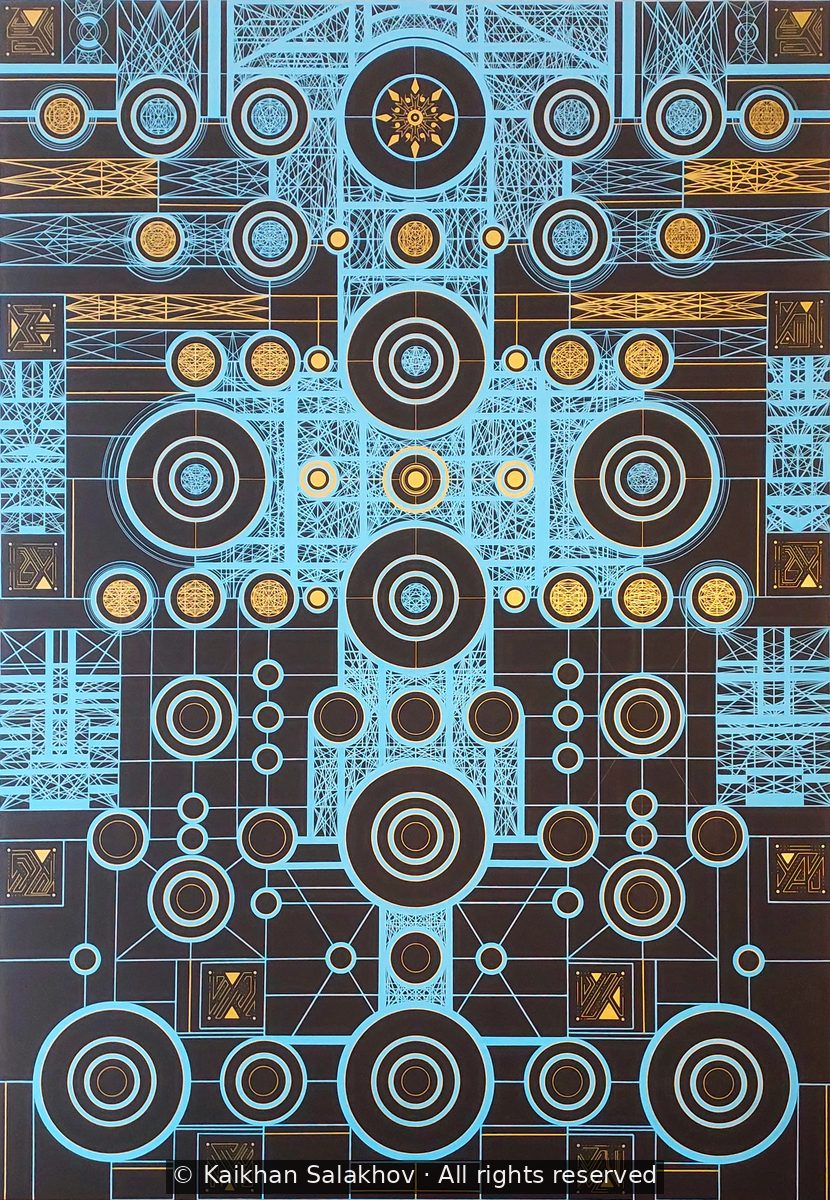
Technologies Across Life Forms
Cooperation, exchange and incompatibility among technical systems shaped by different environments, cognitive architectures and institutions.
Read the full painting meaning →This question examines institutional legitimacy. Institutions may exercise authority without transparent justification or effective mechanisms for correction. Its surrounding discussion also concerns synthetic media: fabricated recordings and personalized content can disrupt shared standards for establishing what occurred.
The analytical issue is how these conditions affect decision rights, oversight, institutional responsibility, and mechanisms for challenging authority. The node treats the potential dysfunction as an open problem: its identification does not demonstrate that the anticipated outcome will occur or that an assumed technology is feasible.
Main problem
Institutions may exercise authority without transparent justification or effective mechanisms for correction.
Central question
What procedures would allow affected groups to evaluate, challenge, and replace institutional decisions?
Analytical connections
Governance
For this institutional legitimacy problem, governance examines decision rights, oversight, institutional responsibility, and mechanisms for challenging authority.
Ethics / Moral Consideration
For this institutional legitimacy problem, ethics / moral consideration examines consent, exposure to harm, unequal treatment, and the scope of moral protection.
Worldview / Philosophy
For this institutional legitimacy problem, worldview / philosophy examines assumptions about knowledge, identity, reality, and the criteria used to justify conclusions.
Cognitive Architecture
For this institutional legitimacy problem, cognitive architecture examines information processing, decision formation, shared cognition, and limits of interpretation.
Technology
For this institutional legitimacy problem, technology examines the proposed mechanism, technical dependencies, control interfaces, and failure conditions.
Communication
For this institutional legitimacy problem, communication examines message access, authenticity, interpretation, delay, and the integrity of exchanged information.
Contact Disposition
For this institutional legitimacy problem, contact disposition examines relations between groups, conflict escalation, cooperation, and responses to unfamiliar agents.
Physical Capability (Reach)
For this institutional legitimacy problem, physical capability (reach) examines the spatial boundary of operations, dependence between locations, and delays affecting intervention.
Original source prose and question wording remain in the book. The summary and central question are analytical restatements; the author’s complete wording remains in the cited source.
ASX positions and scientific context
- P4 scope
- C position: not established
- Speculative scenario
Physical scope and coordination themes describe fields of inquiry. They do not establish a measured capability or scientific validation.
Associated paintings
Source organization
- part of: ASX-35-006
Citation
Kaikhan Salakhov (2024). Astral Space Exploration: The Cosmic Renaissance: The Fundamental Principles of Cosmocybernetics. Part III, “Astral Space Exploration Grid: Interstellar Simulation Technologies Through Stages of Development”; Chapter 5, “The Galactic Stage”; discussion: “Cloaking Civilizations: Perception Manipulation and the Fermi Paradox”; question 7, p. 272. Page references follow the supplied 852-page edition; pagination in other editions may differ. Library reference: ASX-35-006-Q07. https://www.asxgrid.app/library/records/ASX-35-006-Q07.html
Page references follow the supplied 852-page edition; pagination in other editions may differ..
Book publication: . Map created: . Map revised: .