World Domination by Corporations Through Simulation Technologies / Question 2
ASX-32-005-Q02 · Part III · Interstellar Simulation Technologies · Chapter 2: The Planetary Stage
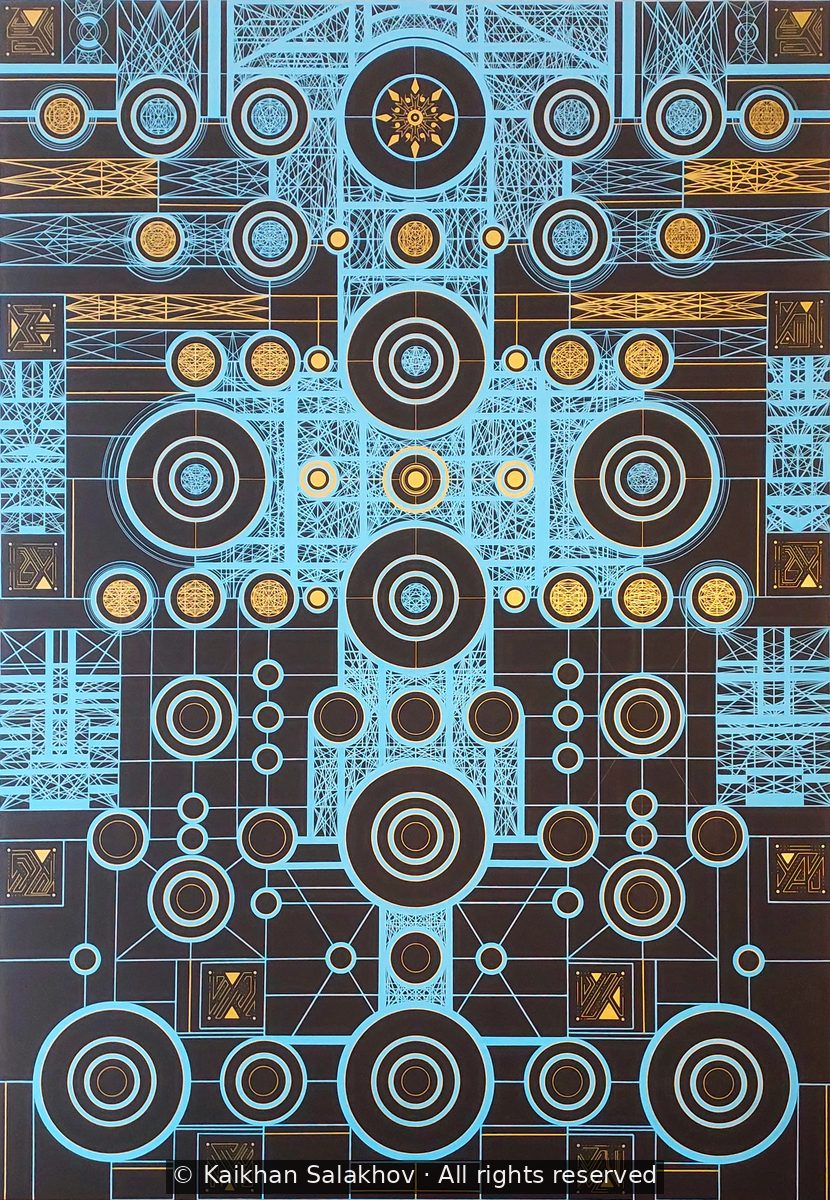
Technologies Across Life Forms
Cooperation, exchange and incompatibility among technical systems shaped by different environments, cognitive architectures and institutions.
Read the full painting meaning →This question examines cultural differentiation. Divergent practices and identities can complicate shared institutions and mutual interpretation. Its surrounding discussion also concerns identity continuity: alteration, duplication, or transfer of an agent can make persistence of identity and responsibility ambiguous.
The analytical issue is how these conditions affect the proposed mechanism, technical dependencies, control interfaces, and failure conditions. The node treats the potential dysfunction as an open problem: its identification does not demonstrate that the anticipated outcome will occur or that an assumed technology is feasible.
Main problem
Divergent practices and identities can complicate shared institutions and mutual interpretation.
Central question
How could groups coordinate while maintaining cultural variation and reciprocal recognition?
Analytical connections
Technology
For this cultural differentiation problem, technology examines the proposed mechanism, technical dependencies, control interfaces, and failure conditions.
Social Structure
For this cultural differentiation problem, social structure examines group membership, social differentiation, cohesion, and the distribution of roles.
Resource Allocation / Economy
For this cultural differentiation problem, resource allocation / economy examines ownership, access to scarce inputs, dependency, and incentives affecting allocation.
Contact Disposition
For this cultural differentiation problem, contact disposition examines relations between groups, conflict escalation, cooperation, and responses to unfamiliar agents.
Governance
For this cultural differentiation problem, governance examines decision rights, oversight, institutional responsibility, and mechanisms for challenging authority.
Ethics / Moral Consideration
For this cultural differentiation problem, ethics / moral consideration examines consent, exposure to harm, unequal treatment, and the scope of moral protection.
Cognitive Architecture
For this cultural differentiation problem, cognitive architecture examines information processing, decision formation, shared cognition, and limits of interpretation.
Worldview / Philosophy
For this cultural differentiation problem, worldview / philosophy examines assumptions about knowledge, identity, reality, and the criteria used to justify conclusions.
Original source prose and question wording remain in the book. The summary and central question are analytical restatements; the author’s complete wording remains in the cited source.
ASX positions and scientific context
- P1 scope
- P2 scope
- C3 thematic relevance
- C position: not established
- Not assessed as validated
Physical scope and coordination themes describe fields of inquiry. They do not establish a measured capability or scientific validation.
Cross-domain dependencies
Conditional analytical comparisons; question-level access follows the parent discussion.
Virtual architecture and corporate power
Control over virtual infrastructure and property can give corporations influence over dependent users.
Concentrated economic power can shape the architecture, access rules and available alternatives.
ASX-22-015: A Possible Future of Virtual Architecture and Its Consequences for the Planetary Economy, pp. 89–90; ASX-32-005: World Domination by Corporations Through Simulation Technologies, pp. 223–224.
Open ASX-22-015Simulation, dependency and coercion
Control of a simulated environment can create dependence through access, representation, property or exit restrictions. Economic and political power outside the simulation can influence the rules enforced within it.
ASX-22-016: Virtual Architecture in Underdeveloped Areas. The Functions of Escape and Control, pp. 90–91; ASX-32-005: World Domination by Corporations Through Simulation Technologies, pp. 223–224.
Open ASX-22-016Simulation, dependency and coercion
Control of a simulated environment can create dependence through access, representation, property or exit restrictions. Economic and political power outside the simulation can influence the rules enforced within it.
ASX-32-005: World Domination by Corporations Through Simulation Technologies, pp. 223–224; ASX-42-015: An Algorithmically Atomized Digital World. The Rise of Deepfakes, AI Manipulation, and Fragmented Society, pp. 302–303.
Open ASX-42-015Resource access and concentration of power / Simulation, dependency and coercion
Unequal access to energy, technology, transport or information can create dependence and unequal bargaining power. Institutions and dominant operators may reinforce or reduce the same inequalities through allocation and access rules.
Control of a simulated environment can create dependence through access, representation, property or exit restrictions. Economic and political power outside the simulation can influence the rules enforced within it.
ASX-32-005: World Domination by Corporations Through Simulation Technologies, pp. 223–224; ASX-52-004: Commercial Space Flights. A Reflection of Earthly Challenges and Opportunities toward a United Approach to Outer Space, pp. 447–448.
Open ASX-52-004Resource access and concentration of power / Simulation, dependency and coercion
Unequal access to energy, technology, transport or information can create dependence and unequal bargaining power. Institutions and dominant operators may reinforce or reduce the same inequalities through allocation and access rules.
Control of a simulated environment can create dependence through access, representation, property or exit restrictions. Economic and political power outside the simulation can influence the rules enforced within it.
ASX-32-005: World Domination by Corporations Through Simulation Technologies, pp. 223–224; ASX-52-006: Surveillance and Control in the Solar System. The Dark Potential of Space-Based Dystopian Governance, pp. 450–452.
Open ASX-52-006Resource access and concentration of power / Simulation, dependency and coercion
Unequal access to energy, technology, transport or information can create dependence and unequal bargaining power. Institutions and dominant operators may reinforce or reduce the same inequalities through allocation and access rules.
Control of a simulated environment can create dependence through access, representation, property or exit restrictions. Economic and political power outside the simulation can influence the rules enforced within it.
ASX-32-005: World Domination by Corporations Through Simulation Technologies, pp. 223–224; ASX-72-003: The Dangers Here Include Risks of AI-Driven Information Bubbles, Concentration in Quantum Communication, and an Erosion of Liberty, pp. 690–692.
Open ASX-72-003Associated paintings
Source organization
- part of: ASX-32-005
Citation
Kaikhan Salakhov (2024). Astral Space Exploration: The Cosmic Renaissance: The Fundamental Principles of Cosmocybernetics. Part III, “Astral Space Exploration Grid: Interstellar Simulation Technologies Through Stages of Development”; Chapter 2, “The Planetary Stage”; discussion: “World Domination by Corporations Through Simulation Technologies”; question 2, p. 223. Page references follow the supplied 852-page edition; pagination in other editions may differ. Library reference: ASX-32-005-Q02. https://www.asxgrid.app/library/records/ASX-32-005-Q02.html
Page references follow the supplied 852-page edition; pagination in other editions may differ..
Book publication: . Map created: . Map revised: .