The Ethical and Spiritual Implications of Architectural Diversity
ASX-22-030 · Part II · Interstellar Architecture · Chapter 2: The Planetary Stage
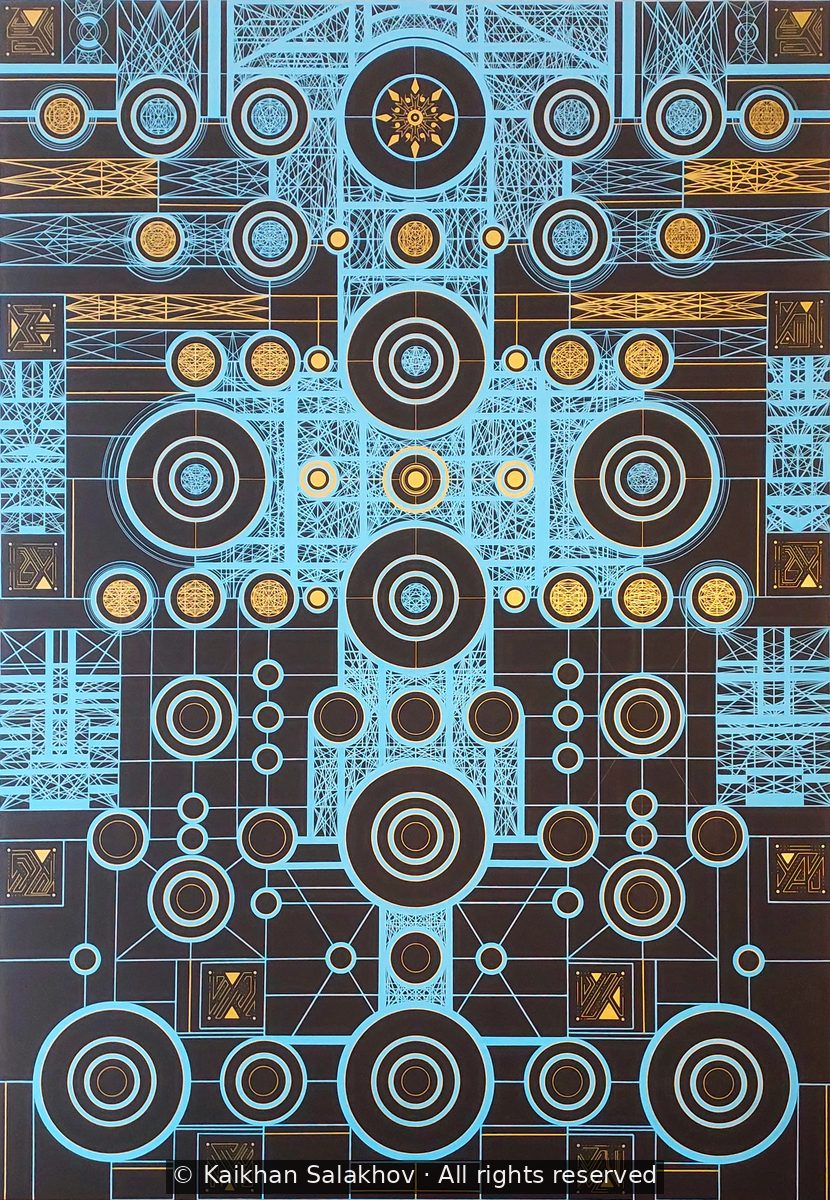
Technologies Across Life Forms
Cooperation, exchange and incompatibility among technical systems shaped by different environments, cognitive architectures and institutions.
Read the full painting meaning →This discussion examines cultural differentiation. Divergent practices and identities can complicate shared institutions and mutual interpretation. Its surrounding discussion also concerns identity continuity: alteration, duplication, or transfer of an agent can make persistence of identity and responsibility ambiguous.
The analytical issue is how these conditions affect consent, exposure to harm, unequal treatment, and the scope of moral protection. The node treats the potential dysfunction as an open problem: its identification does not demonstrate that the anticipated outcome will occur or that an assumed technology is feasible.
Main problem
Divergent practices and identities can complicate shared institutions and mutual interpretation.
Central question
How could groups coordinate while maintaining cultural variation and reciprocal recognition?
Analytical connections
Ethics / Moral Consideration
For this cultural differentiation problem, ethics / moral consideration examines consent, exposure to harm, unequal treatment, and the scope of moral protection.
Religion / Spirituality / Ultimate Meaning
For this cultural differentiation problem, religion / spirituality / ultimate meaning examines belief communities, religious authority, continuity of meaning, and freedom of interpretation.
Social Structure
For this cultural differentiation problem, social structure examines group membership, social differentiation, cohesion, and the distribution of roles.
Worldview / Philosophy
For this cultural differentiation problem, worldview / philosophy examines assumptions about knowledge, identity, reality, and the criteria used to justify conclusions.
Technology
For this cultural differentiation problem, technology examines the proposed mechanism, technical dependencies, control interfaces, and failure conditions.
Biology / Substrate
For this cultural differentiation problem, biology / substrate examines substrate-specific needs, compatibility, vulnerability, and the consequences of biological modification.
Environmental Systems
For this cultural differentiation problem, environmental systems examines environmental dependencies, unintended ecological effects, and conditions required for habitation.
Resource Allocation / Economy
For this cultural differentiation problem, resource allocation / economy examines ownership, access to scarce inputs, dependency, and incentives affecting allocation.
Contact Disposition
For this cultural differentiation problem, contact disposition examines relations between groups, conflict escalation, cooperation, and responses to unfamiliar agents.
Original source prose and question wording remain in the book. The summary and central question are analytical restatements; the author’s complete wording remains in the cited source.
ASX positions and scientific context
- P1 scope
- P2 scope
- C position: not established
- Not assessed as validated
Physical scope and coordination themes describe fields of inquiry. They do not establish a measured capability or scientific validation.
Cross-domain dependencies
Conditional analytical comparisons; question-level access follows the parent discussion.
Exclusion, segregation and conflict / Knowledge and cultural continuity
Exclusionary classifications or doctrines can legitimate segregation and coercion. Conflict and coercive governance can in turn intensify mistrust and separation. These are conditional feedback mechanisms, not inevitable consequences of cultural difference.
Continuity depends on storage, interpretation, education and communication. Changes to those systems can alter shared knowledge, while communities and institutions decide which records and practices are preserved or excluded.
ASX-22-030: The Ethical and Spiritual Implications of Architectural Diversity, pp. 96–96; ASX-52-001: Unaware of Levels of Awareness. Implications for the Planetary Level of Space Exploration, pp. 439–443.
Open ASX-52-001Associated paintings
- Astral Space Exploration: Renovatio
- Astral Space Exploration: The Cosmic Engineering. Part I
- Astral Space Exploration: The Cosmic Engineering. Part II
- Astral Space Exploration: The Cosmic Engineering. Part III
- Astral Space Exploration: The Cosmic Engineering. Part IV
- Technologies Across Life Forms
- Spirituality Across Life Forms
- Ethics Across Life Forms
Source organization
- chapter context: CTX-22
Citation
Kaikhan Salakhov (2024). Astral Space Exploration: The Cosmic Renaissance: The Fundamental Principles of Cosmocybernetics. Part II, “Astral Space Exploration Grid: Interstellar Architecture Through Stages of Development”; Chapter 2, “The Planetary Stage”; discussion: “The Ethical and Spiritual Implications of Architectural Diversity”, p. 96. Page references follow the supplied 852-page edition; pagination in other editions may differ. Library reference: ASX-22-030. https://www.asxgrid.app/library/records/ASX-22-030.html
Page references follow the supplied 852-page edition; pagination in other editions may differ..
Book publication: . Map created: . Map revised: .